Why It Happens Here
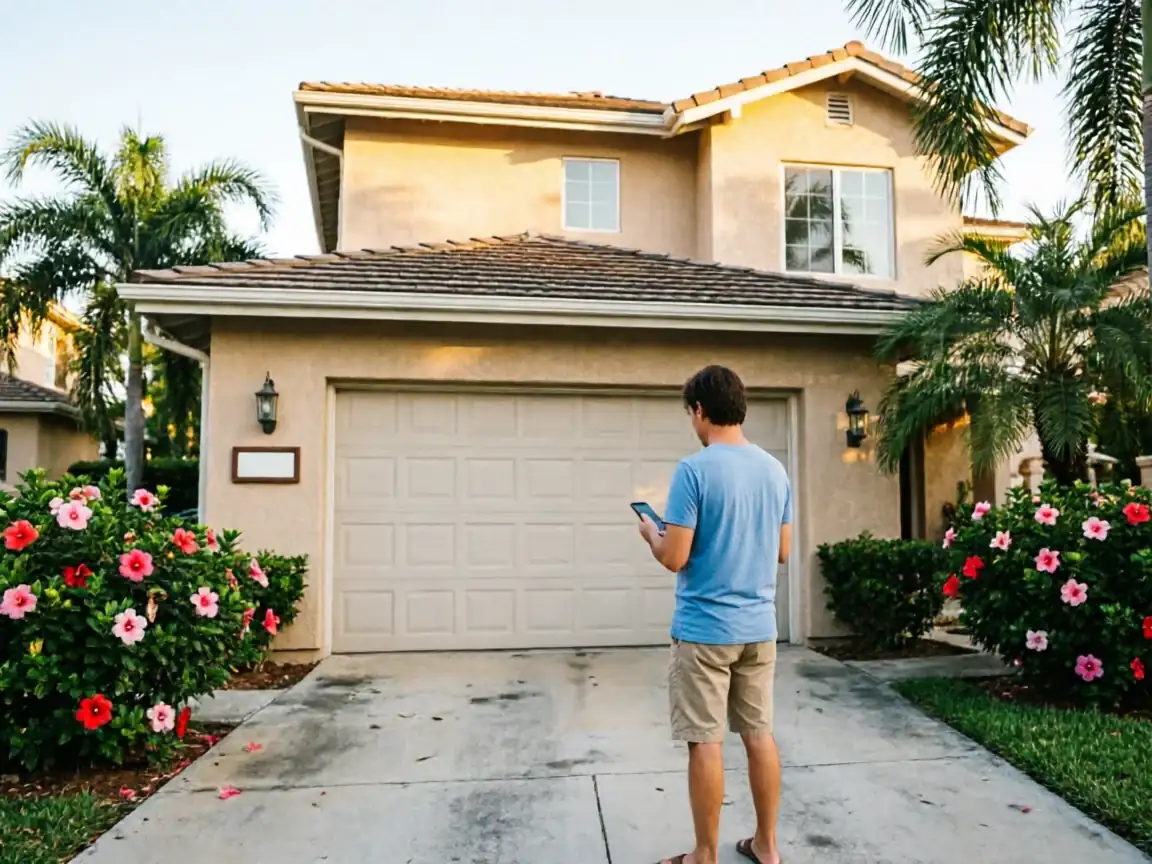
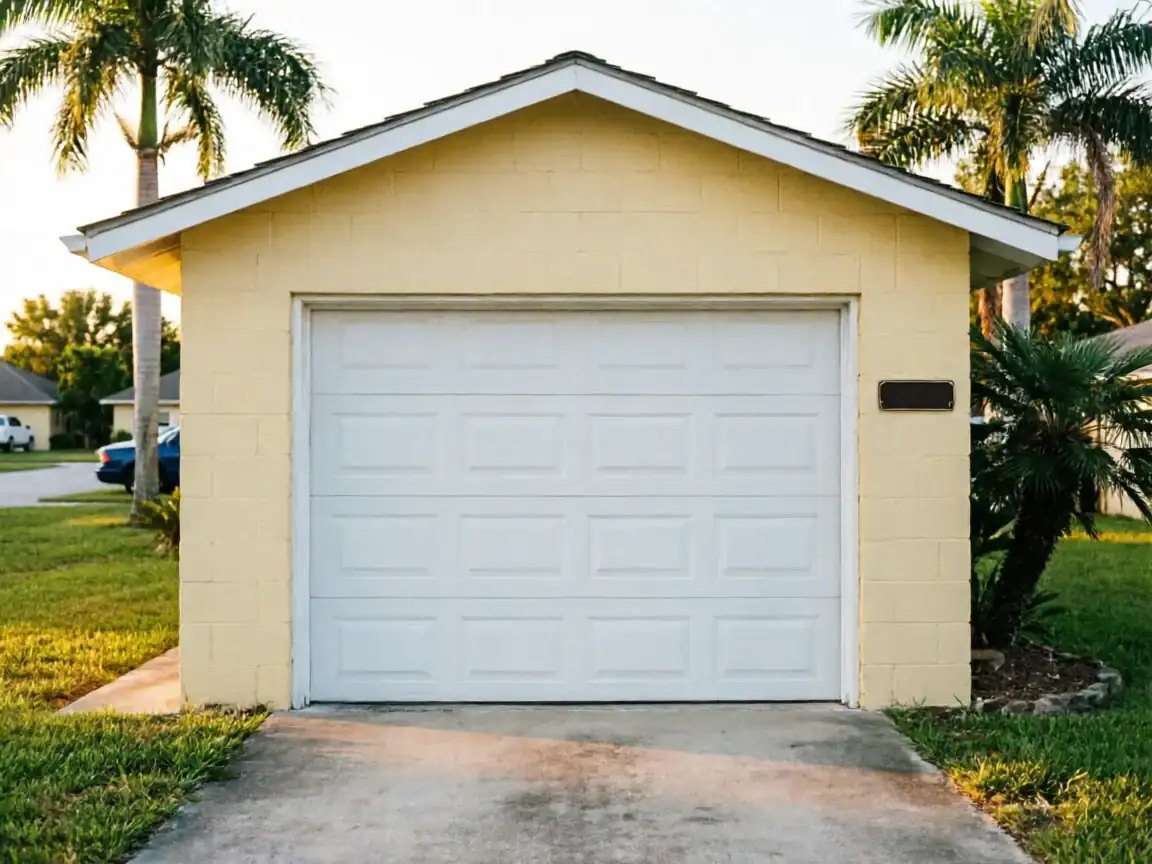
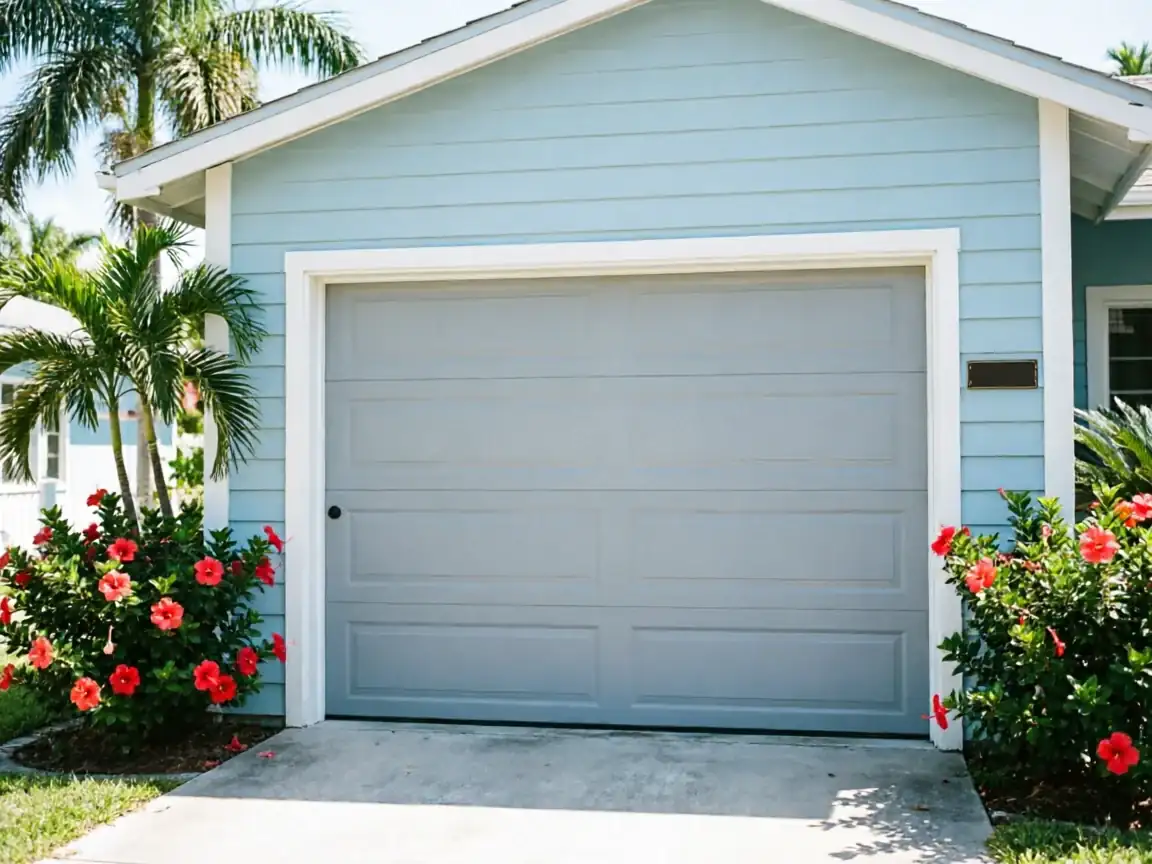
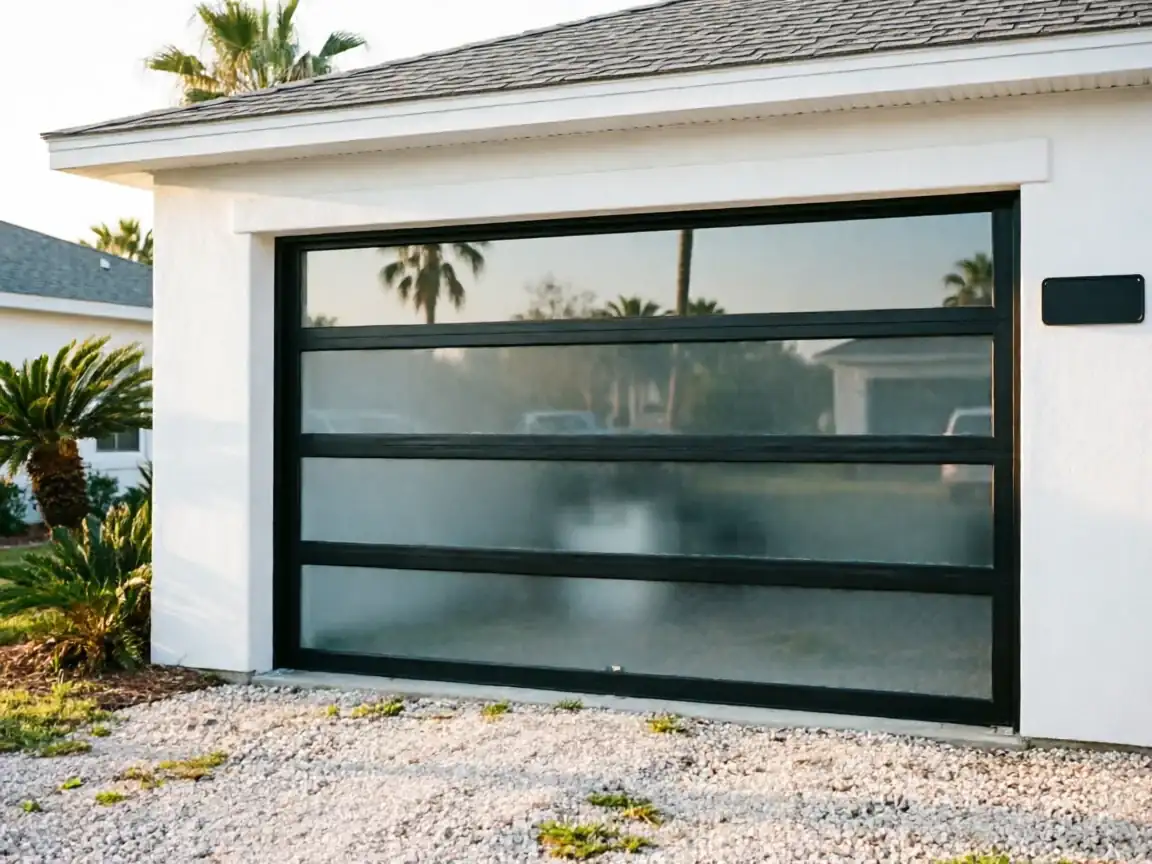
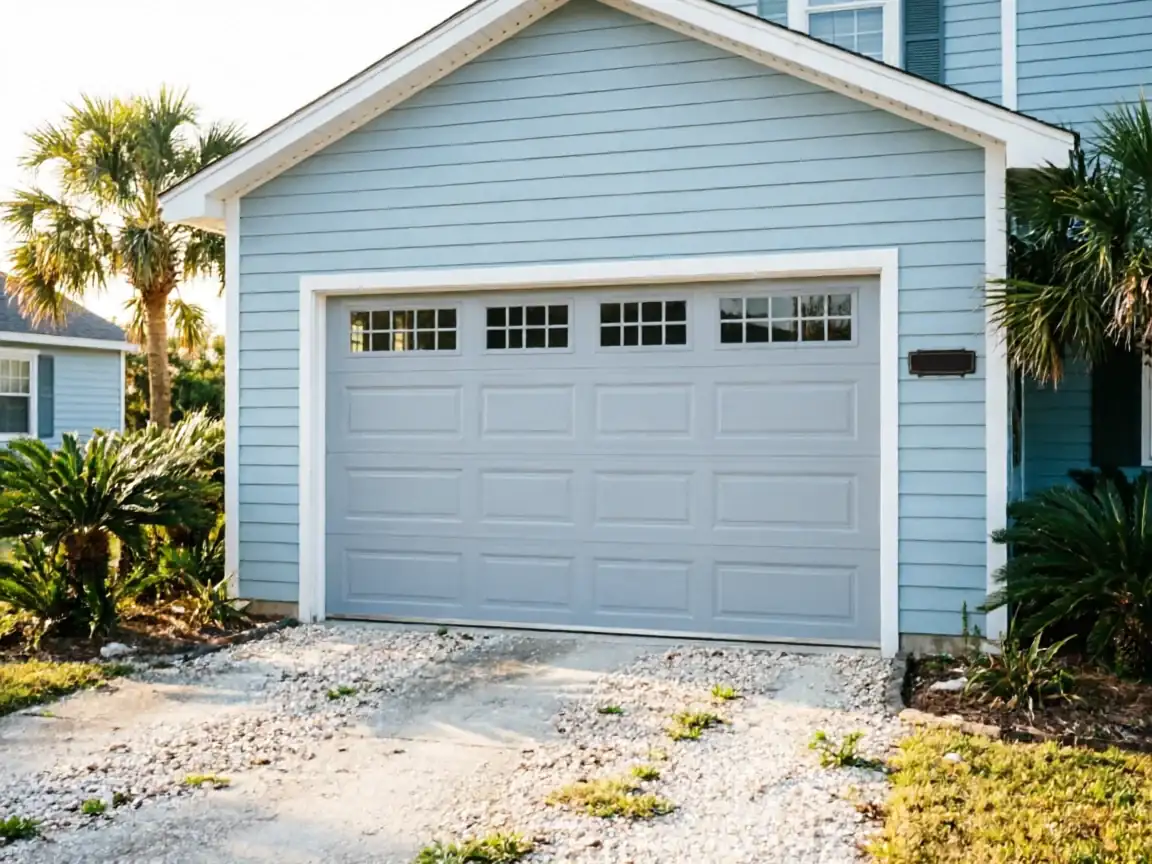
Across the wider service area the median home dates to 1979, but the typical house on Tierra Verde went up closer to 1989 - a decade newer. That matters for what's failing now: these aren't the original one-piece doors from the 1960s stock common elsewhere, they're builder-grade steel sectional doors from the late 80s and 90s hitting the end of a normal service life, springs and all. The other number worth knowing: median household income here runs near $148,785, against roughly $79,798 across the service area as a whole. That gap shows up directly in what people replace a failing door with - fewer bare steel panels, more insulated and wood-composite doors going in. With only about 1,765 households on this stretch, we're not running a high call volume here; each install tends to get more attention to fit and finish, not less.
How It Shows Up
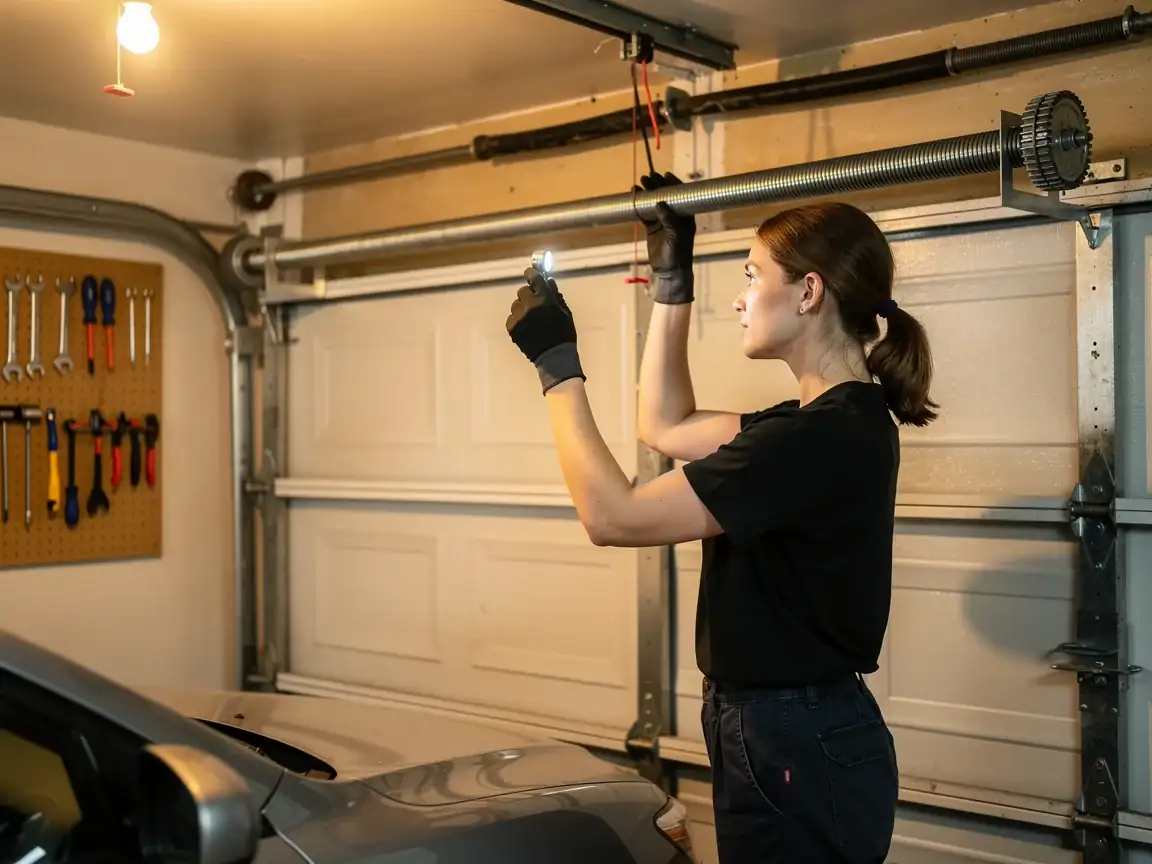
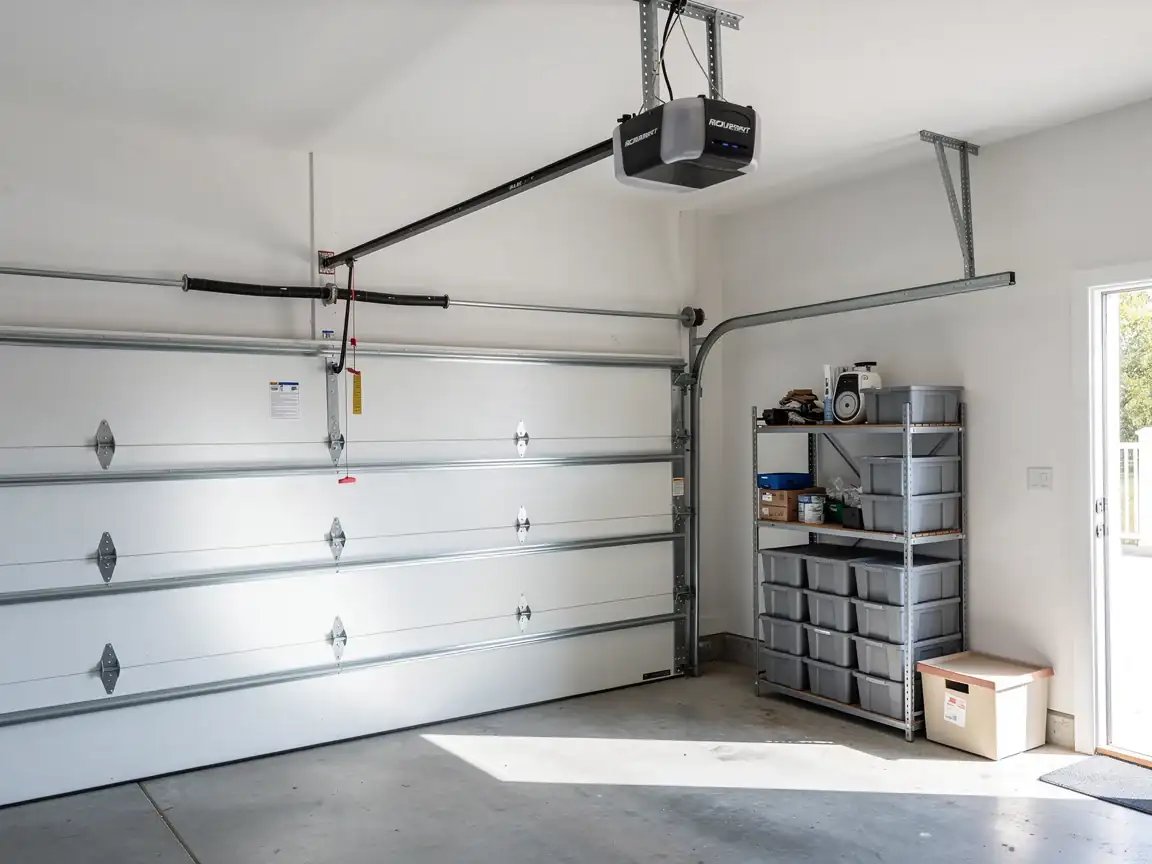
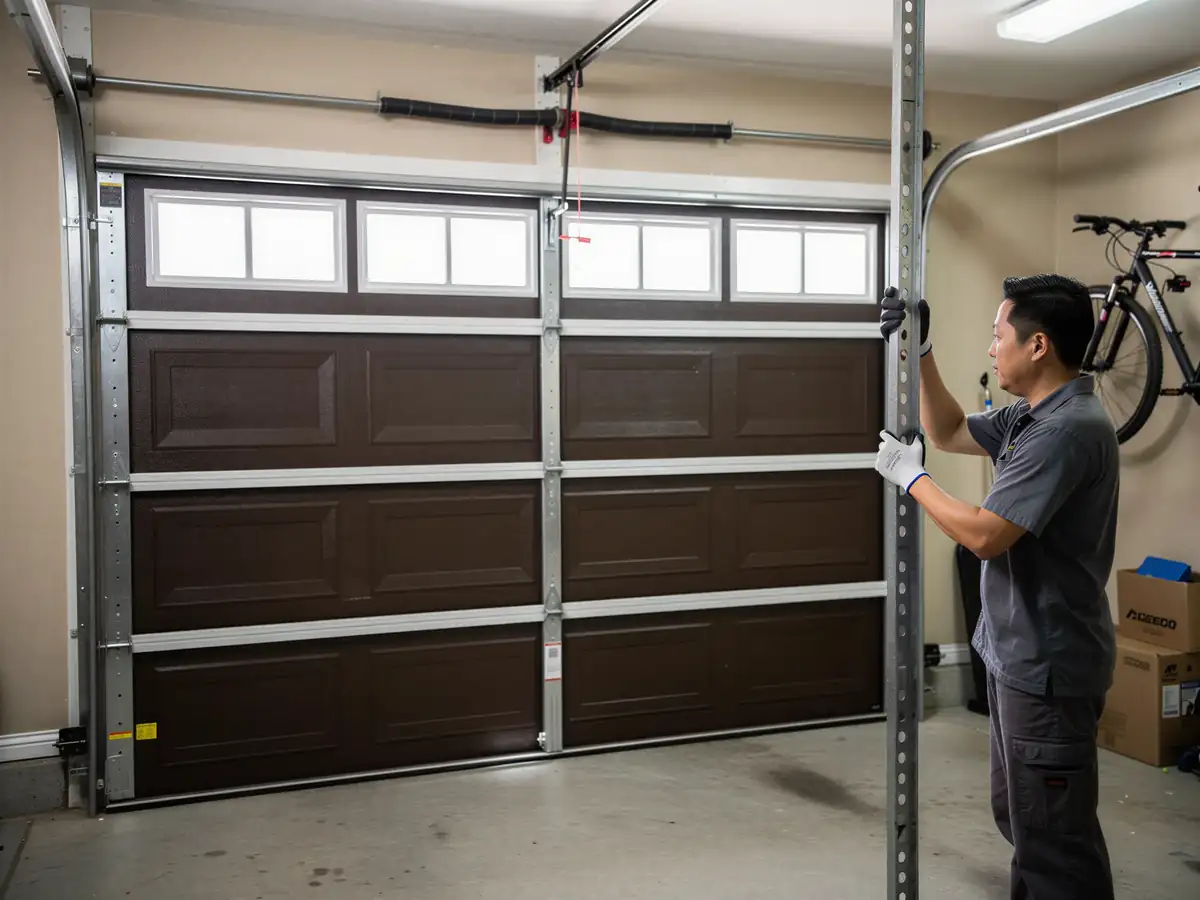
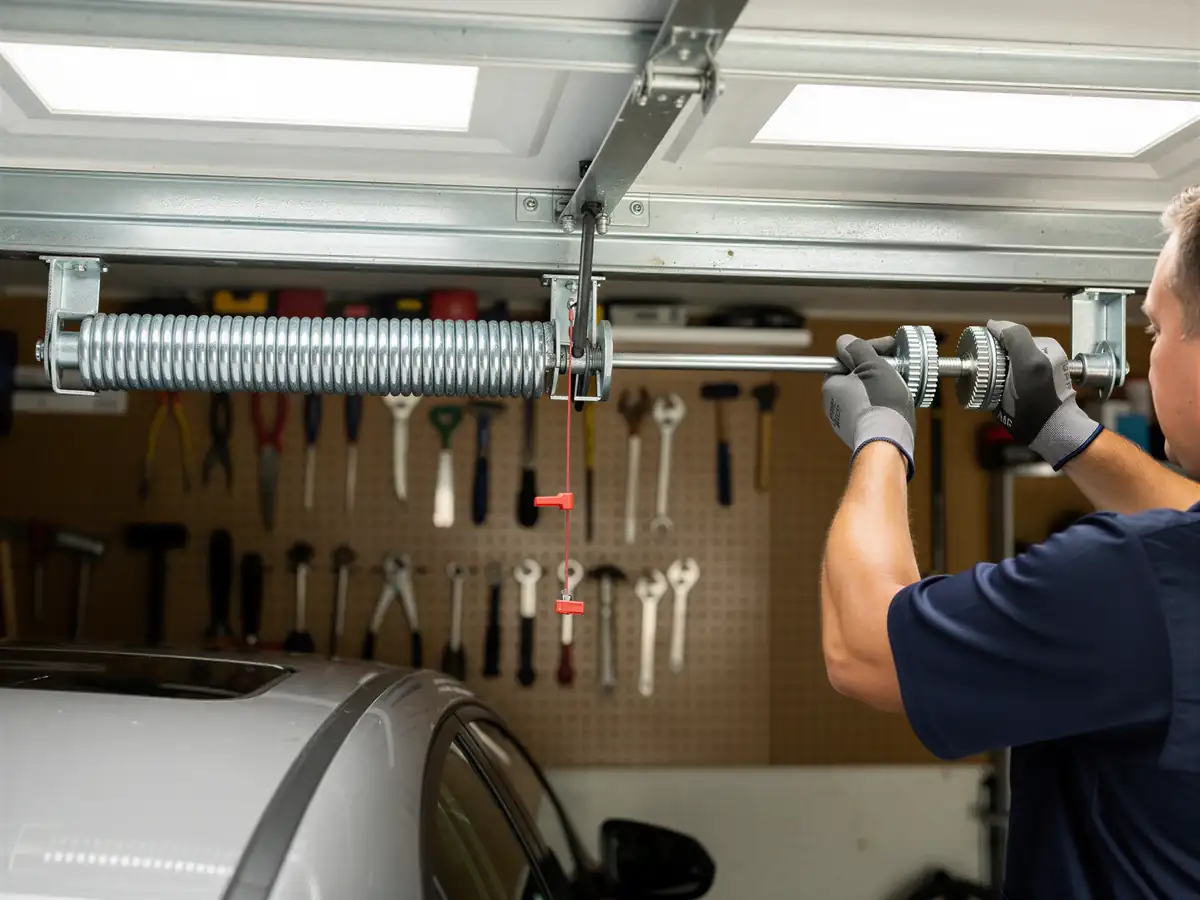
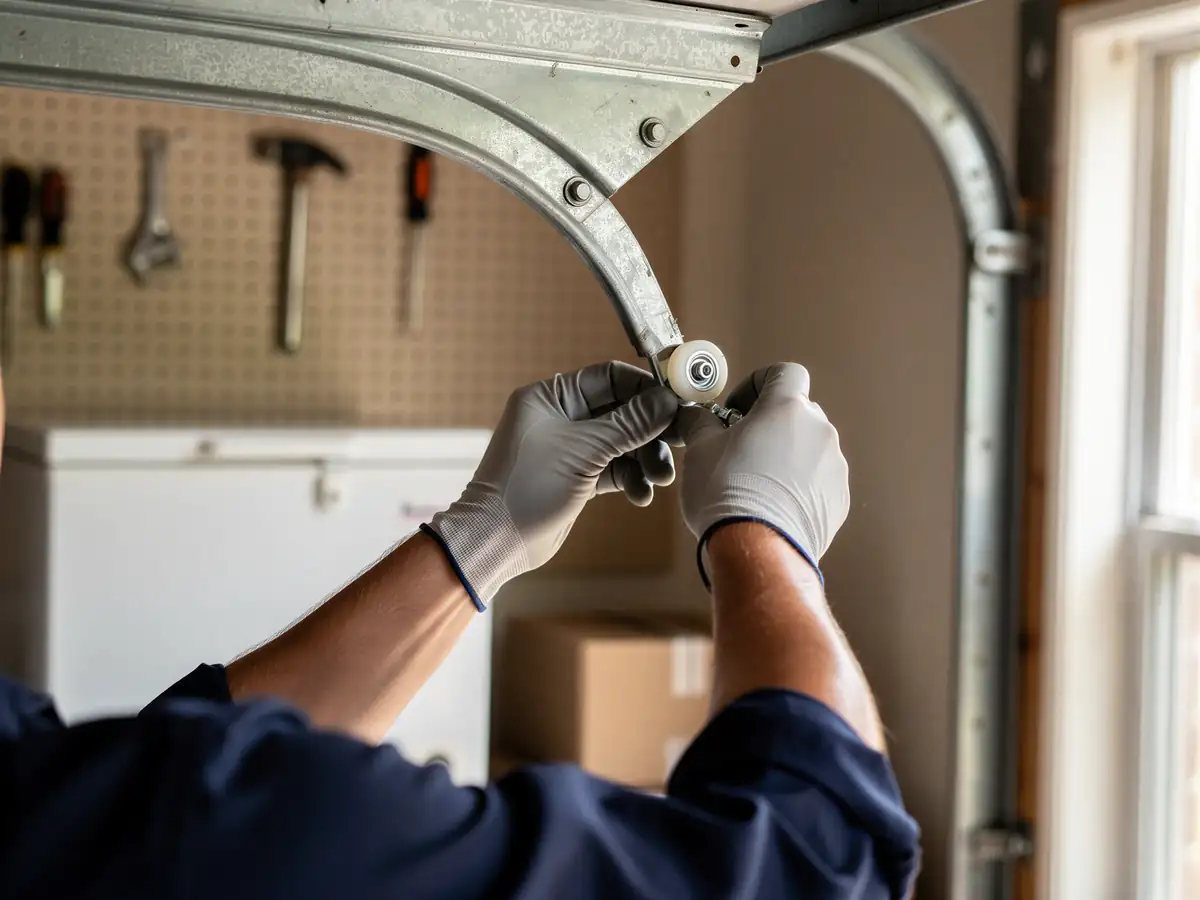
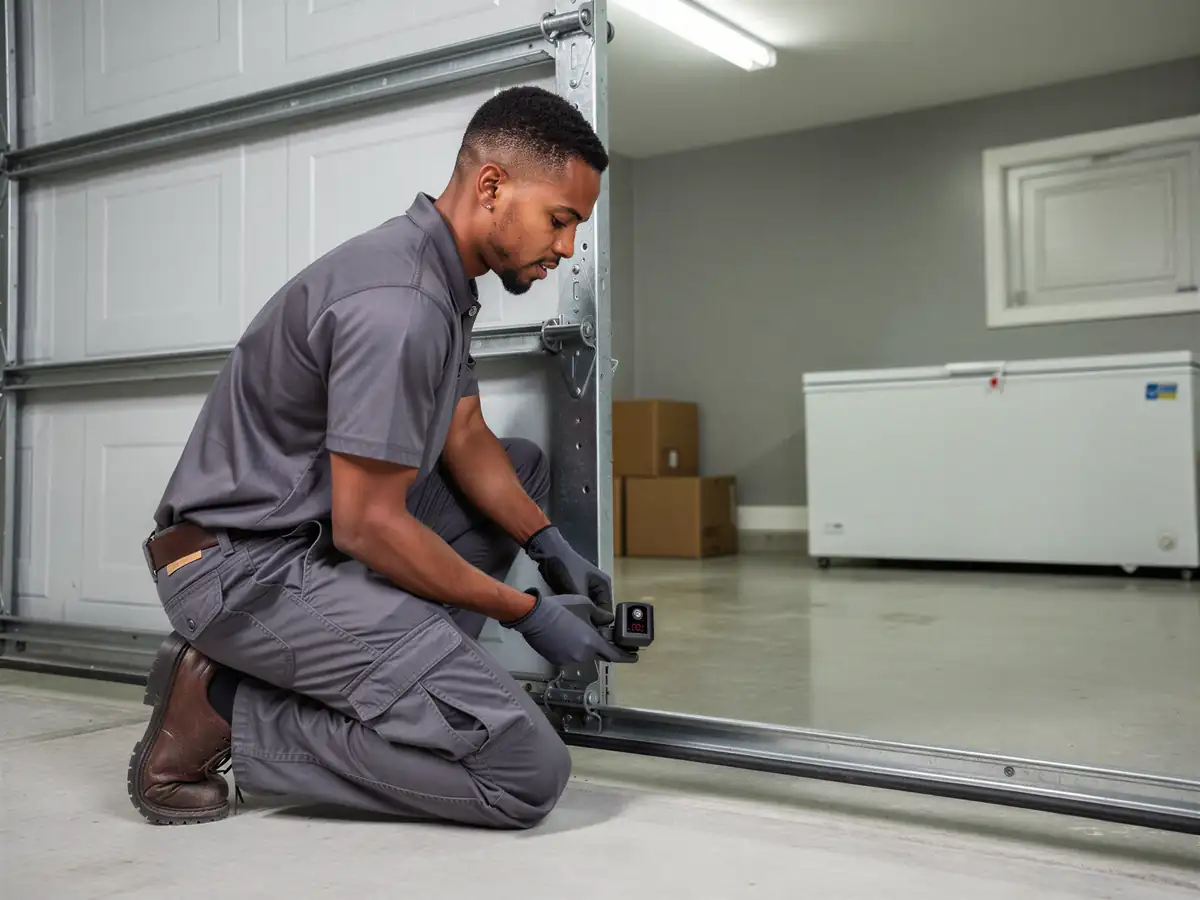
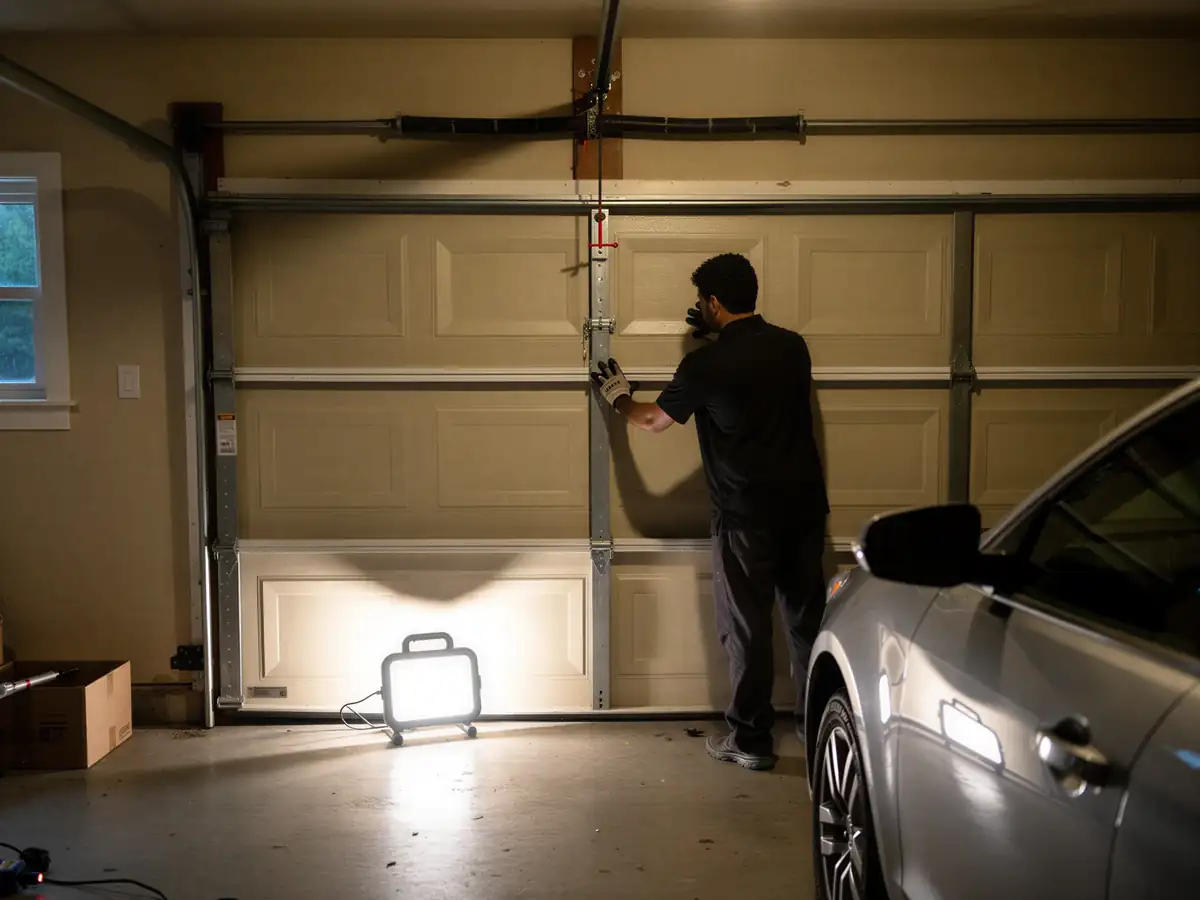
On a door from the late 80s or 90s, the first sign is usually the opener struggling on the up-stroke - the torsion spring was sized for a lighter, uninsulated panel and has been carrying that load for over thirty years. You'll also see track misalignment on garages where the opening was framed slightly out of square, a common quirk of that era's construction that nobody notices until a panel starts binding. Some owners come to us already past the point of a patch repair: the galvanized coating on the original panels is pitting, the bottom seal has hardened and cracked, and the whole door flexes visibly when it's down. None of that is an emergency the way a snapped cable is - if your door is sticking rather than stuck, that's a repair call, not an install call. We have a separate page for exactly that kind of job.
Parts We Carry
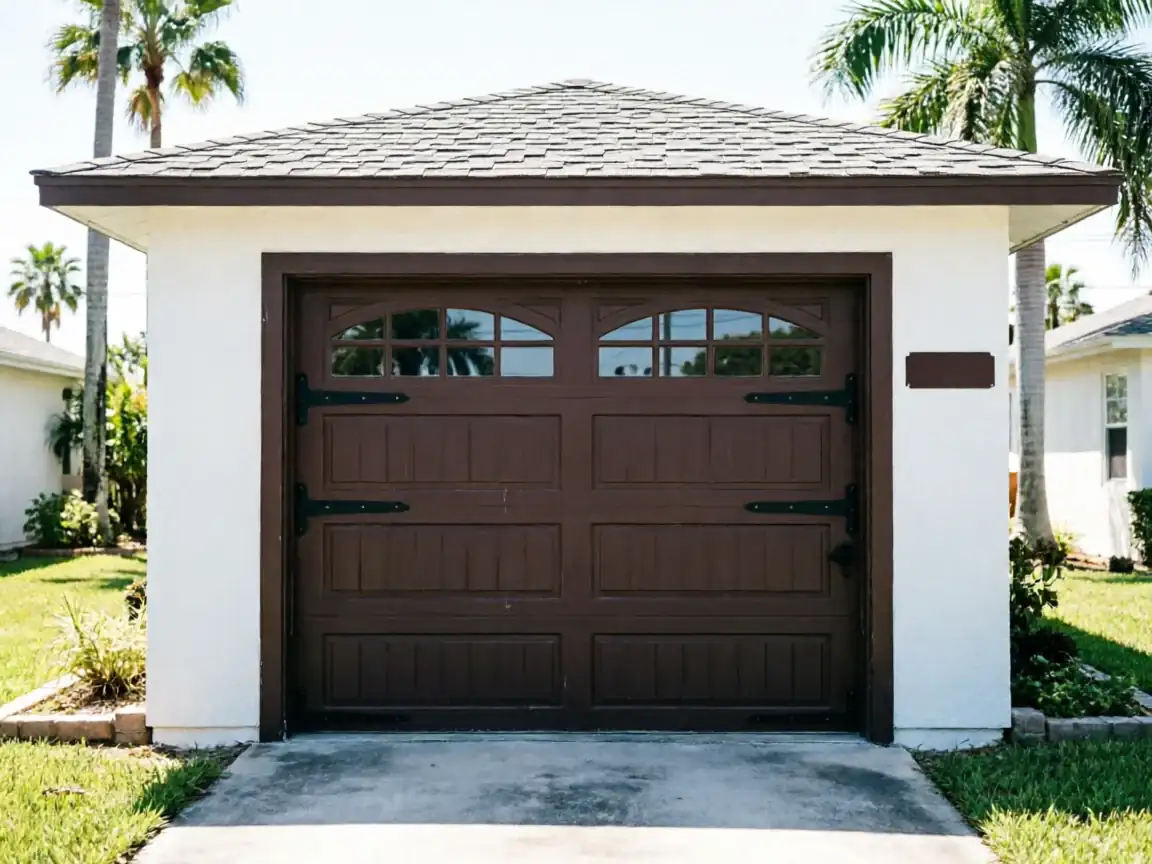
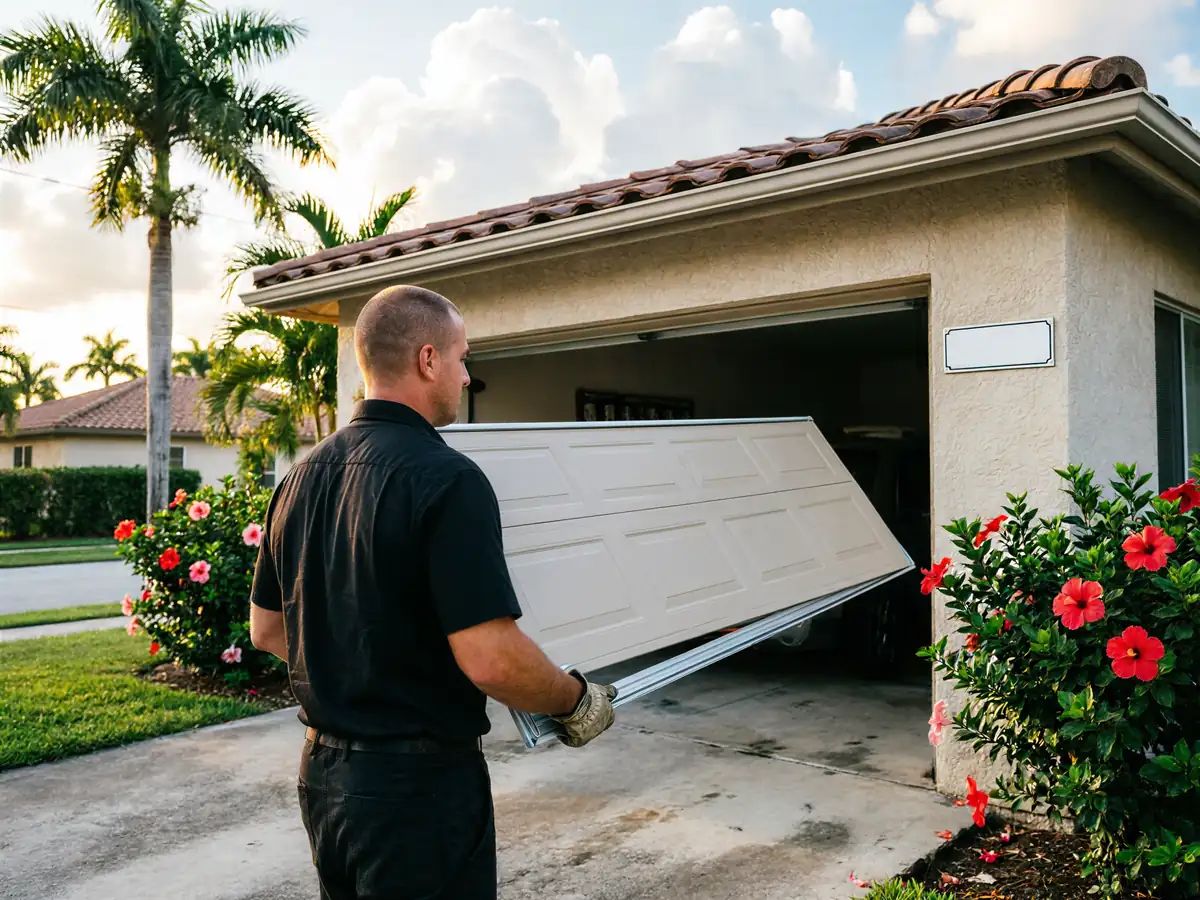
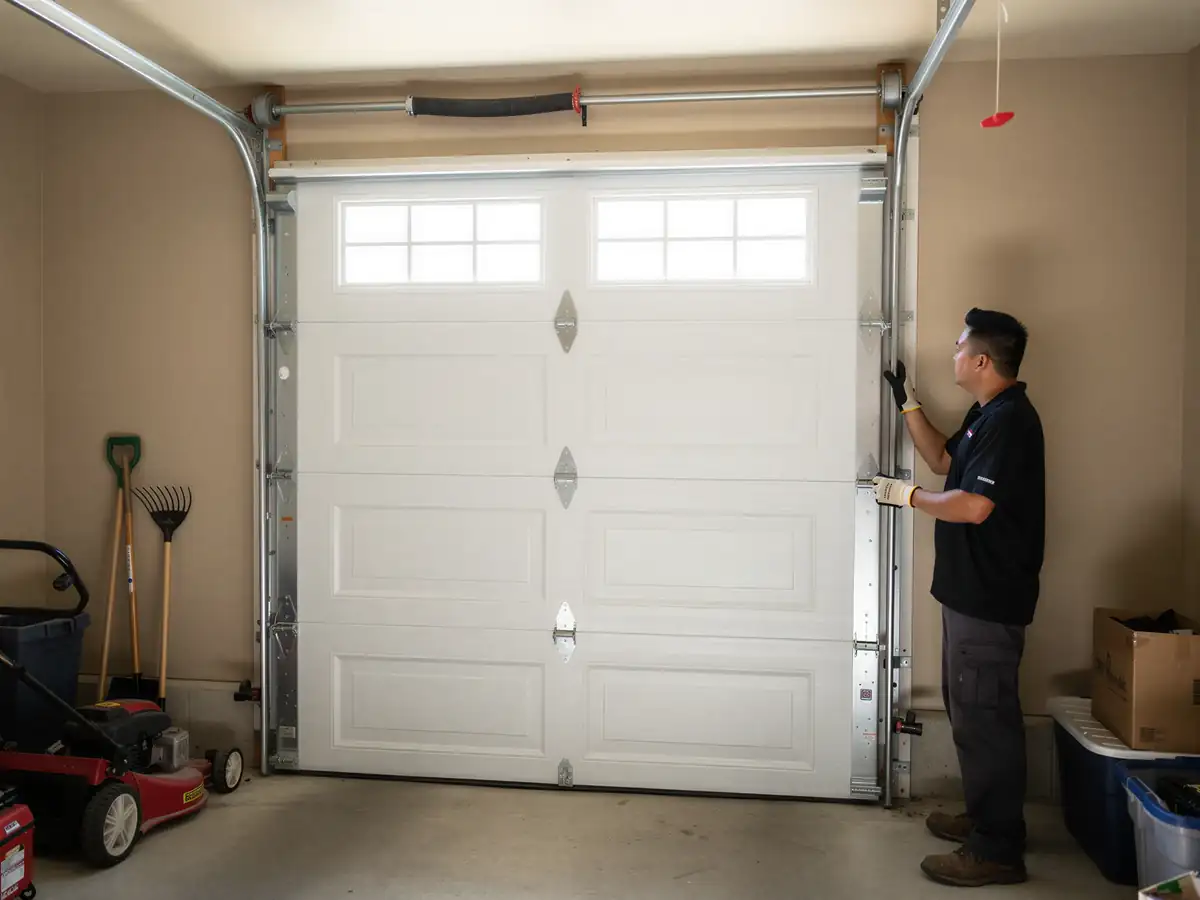
For this stretch we stock insulated steel sectional doors in a few standard widths, plus steel-backed composite overlay doors for owners who want a heavier look without solid wood's upkeep. Both come in double-walled and triple-layer insulated options, which matters more here than it might elsewhere given how many of these installs are full replacements rather than patch jobs on an aging panel. We also carry standard-lift and low-headroom track kits, since garages built in this era sometimes have less clearance above the opening than current doors assume. What we don't keep on the truck is custom wood - solid wood doors are special order, and if that's what you want, plan on a longer lead time than the standard install.
Where This Job Goes Sideways
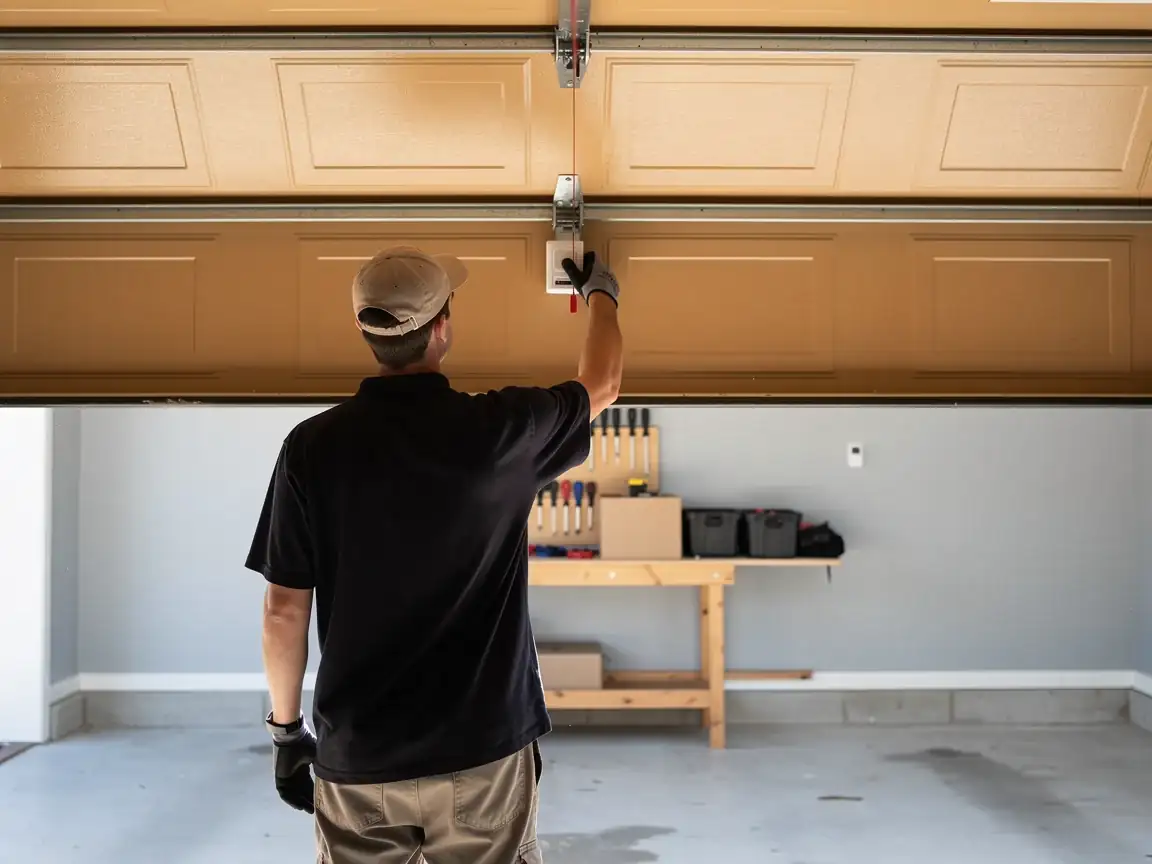
The usual snag on an island install isn't the door itself, it's the header. Garages framed in the late 80s weren't built expecting an insulated door's added weight or a wider rough opening for a new standard width, and sometimes the header needs reinforcing before the new door can hang safely. That's a carpentry step we'll flag rather than skip past, and it adds a day if lumber has to be ordered. The other place things stall is opener wiring - original openers from this era often ran on a dedicated circuit that doesn't meet a new opener's requirements, which means an electrician's involved before we're involved. We'd rather tell you that up front than hand you a door that looks finished and an opener that trips a breaker the first time you use it. For repairs on an existing door rather than a full swap, that's handled through our Tierra Verde repair page, not this one.