St. Petersburg homes built 1958-2011 run older track hardware than most. Here's what actually knocks a door off track and when it's a repair job, not a new door.
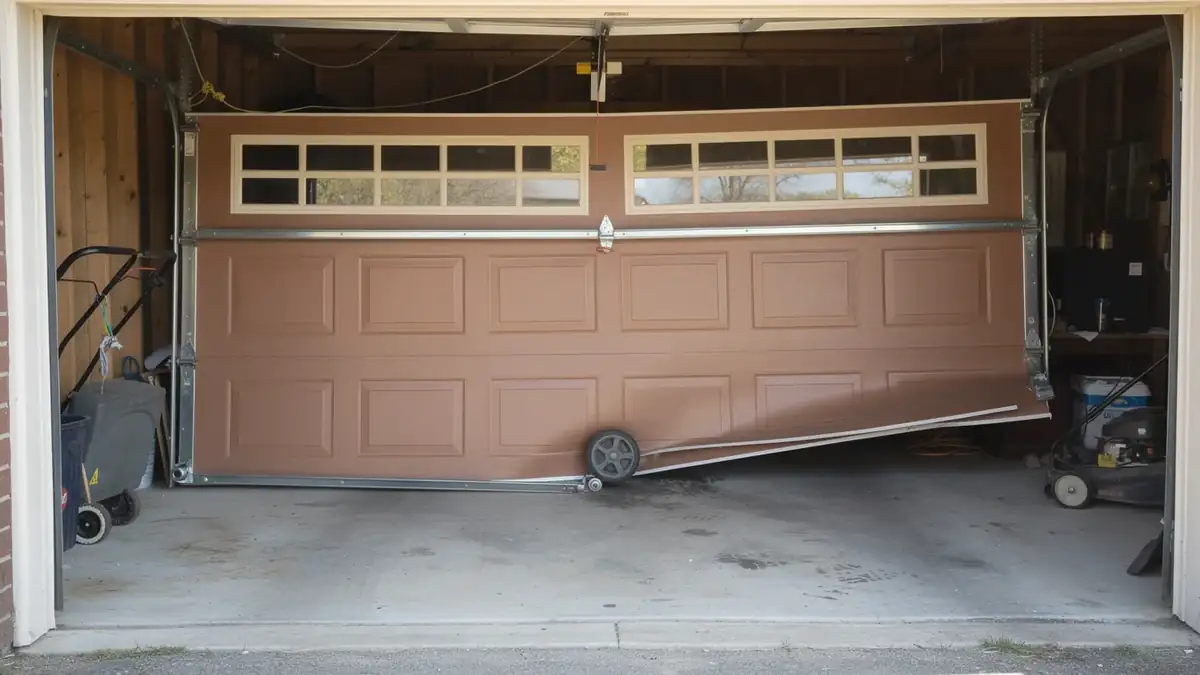
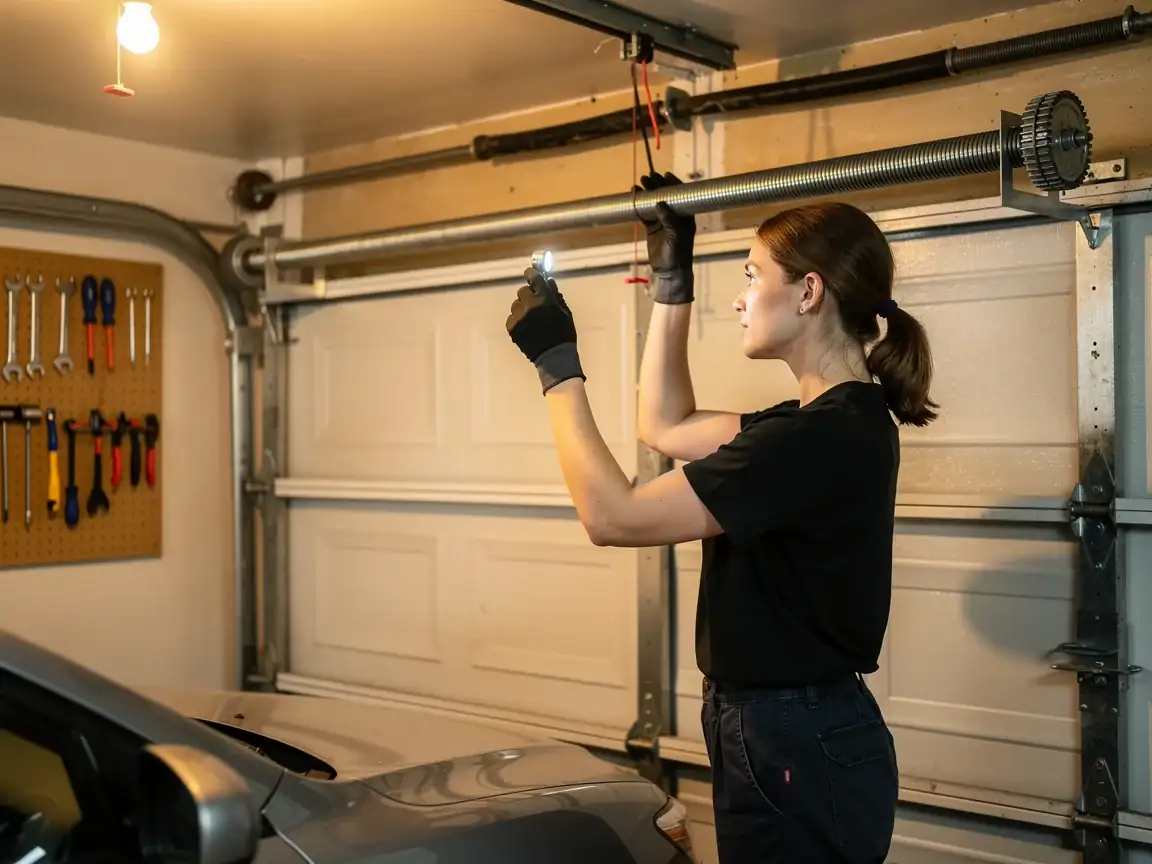
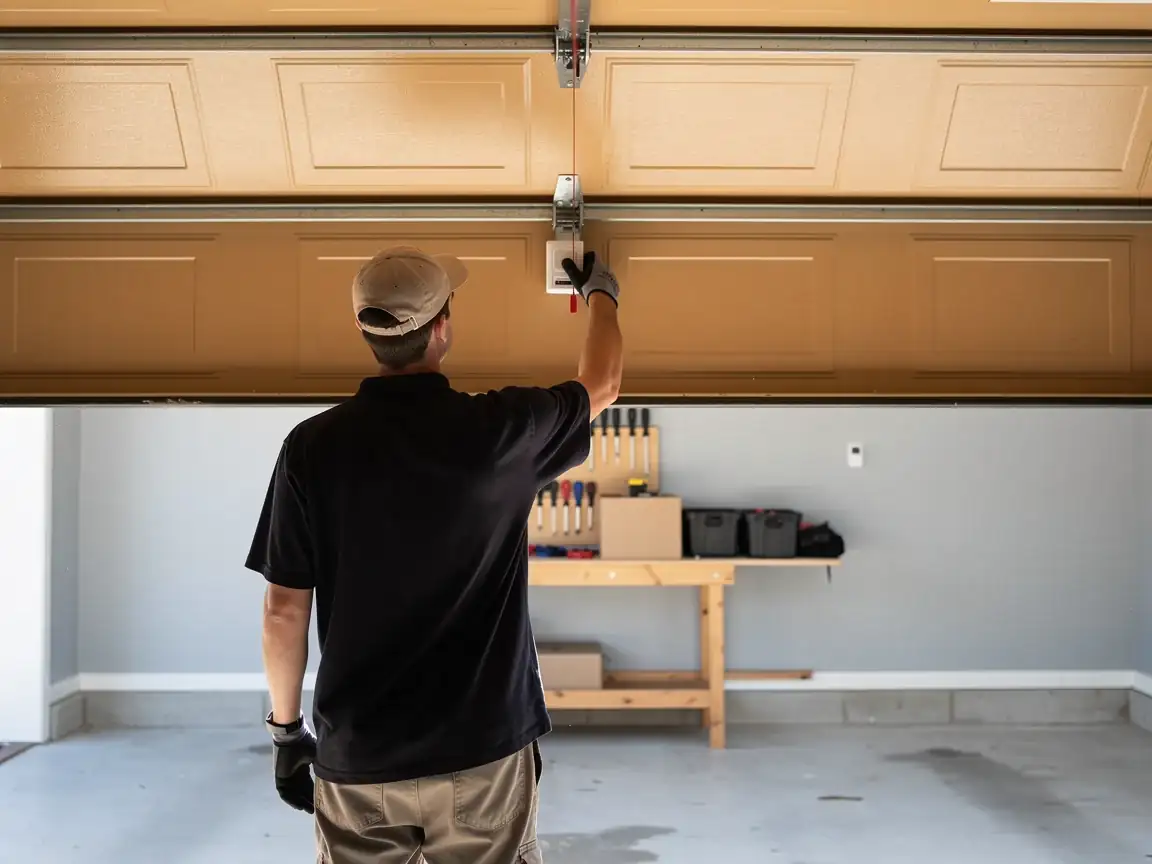
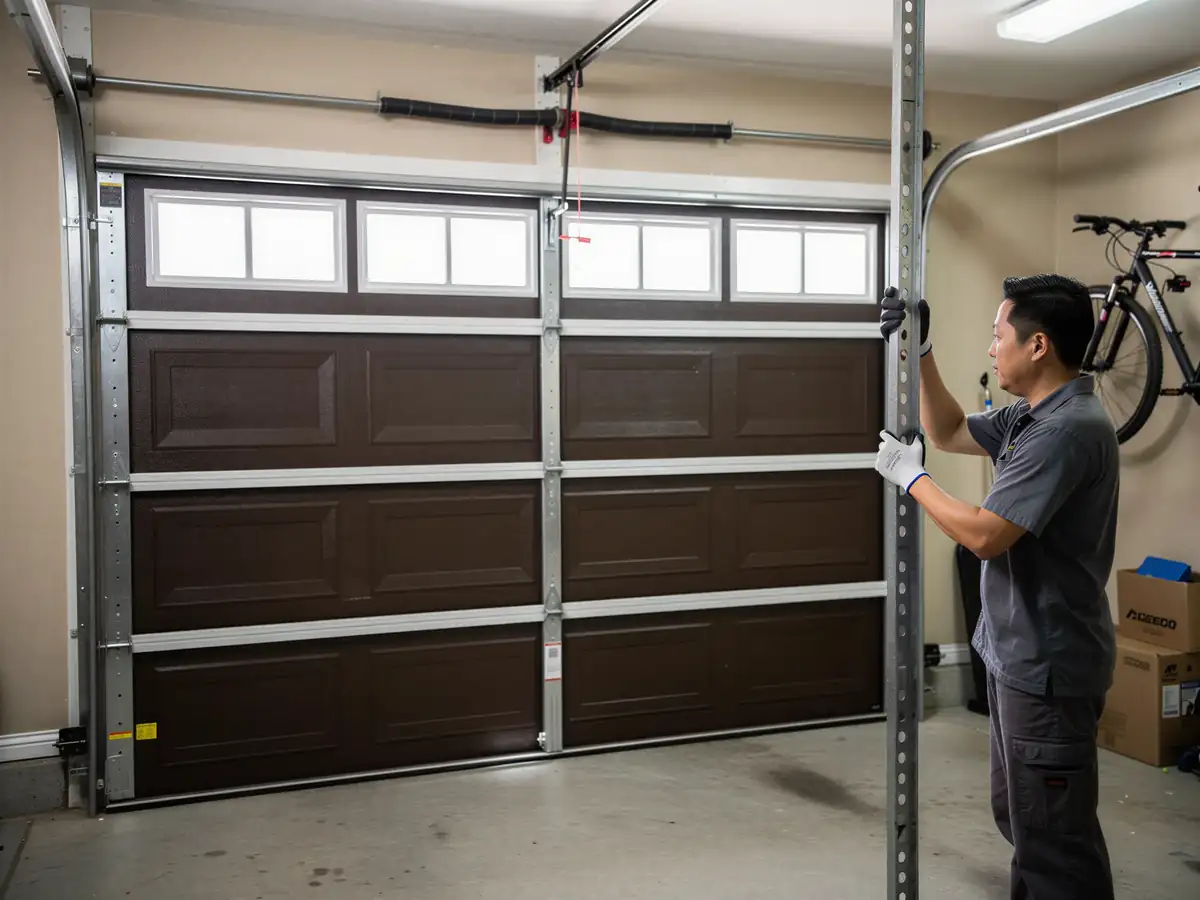
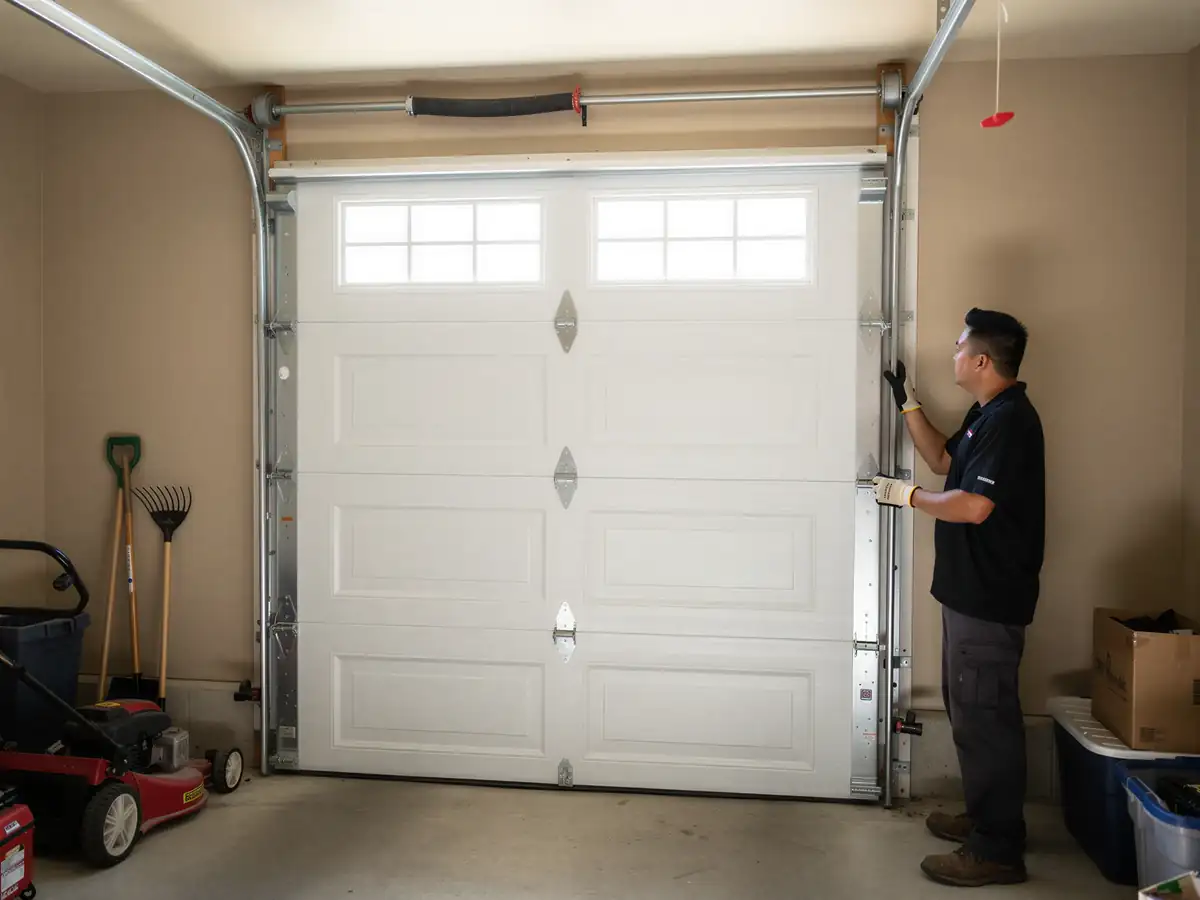
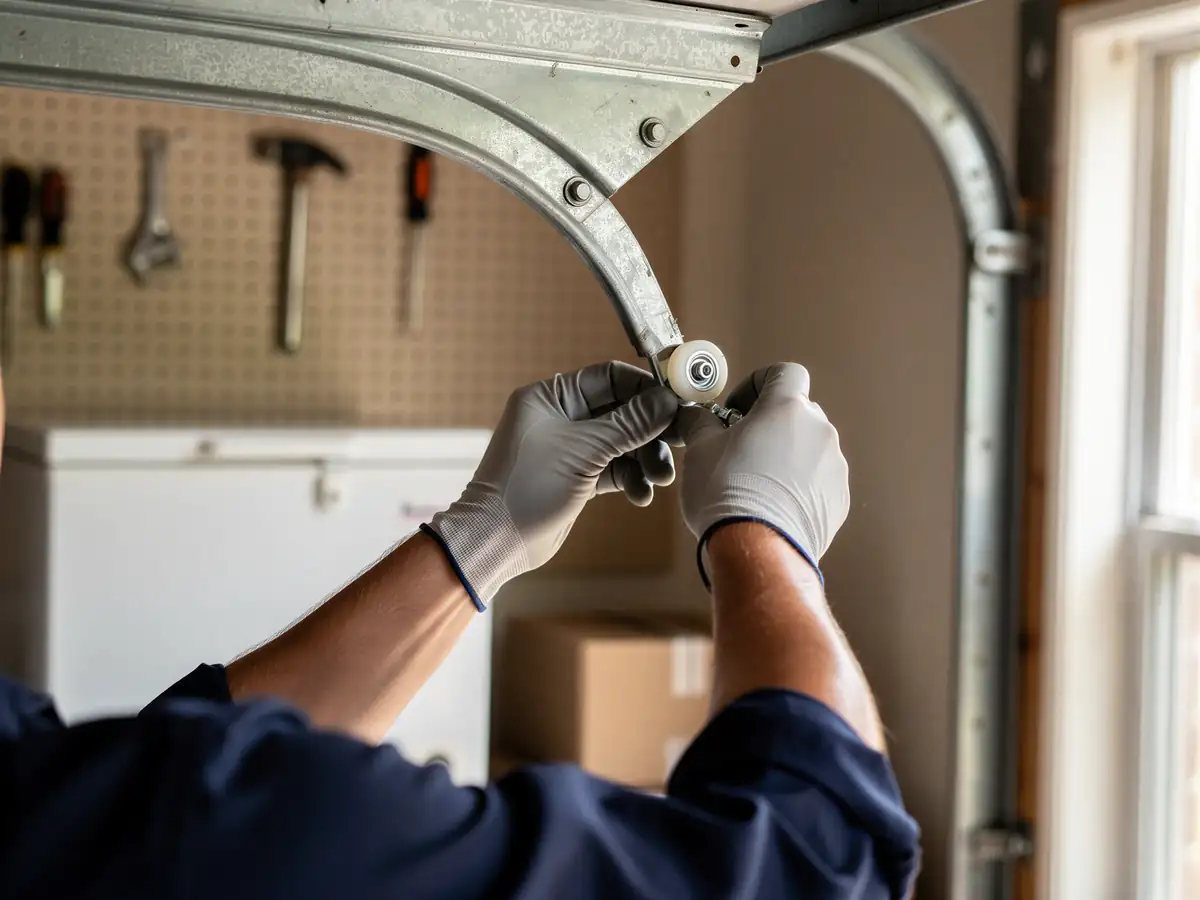
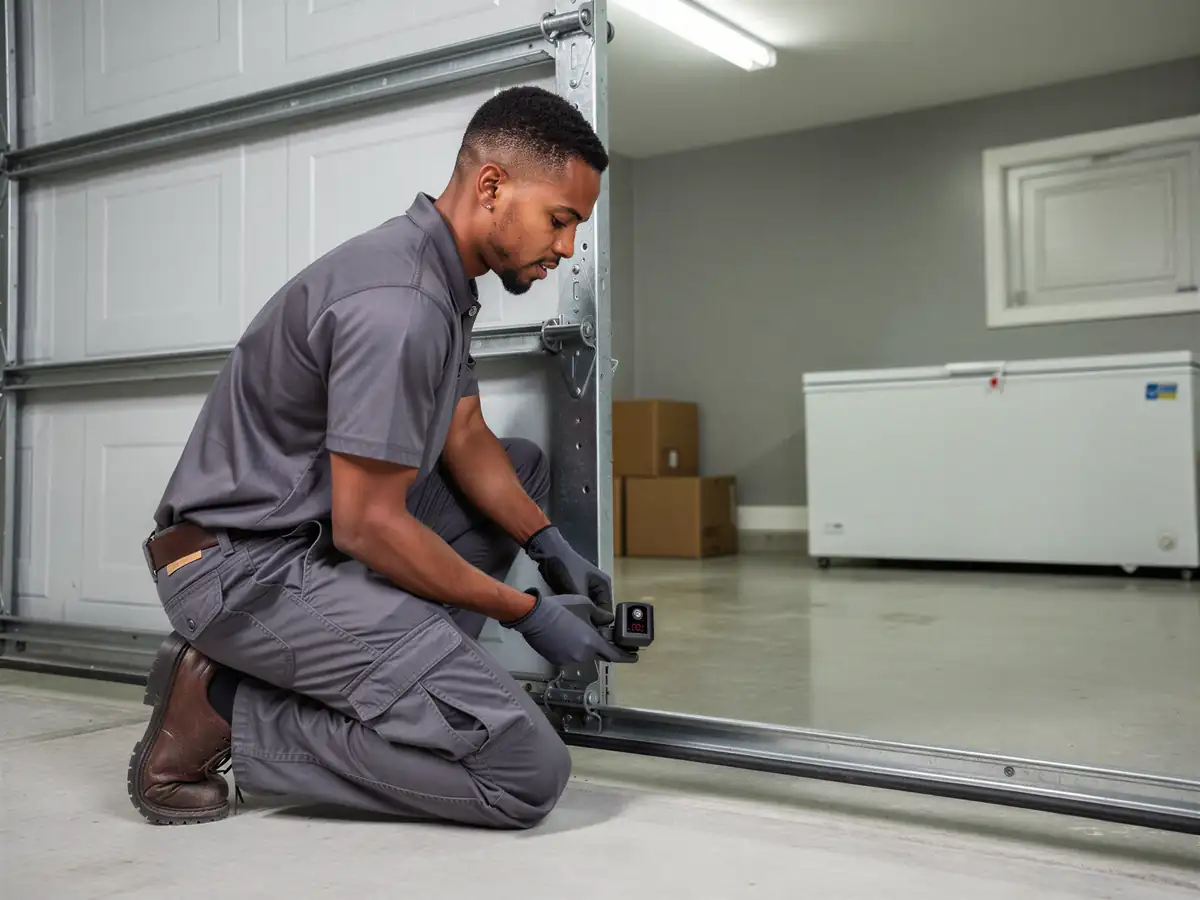
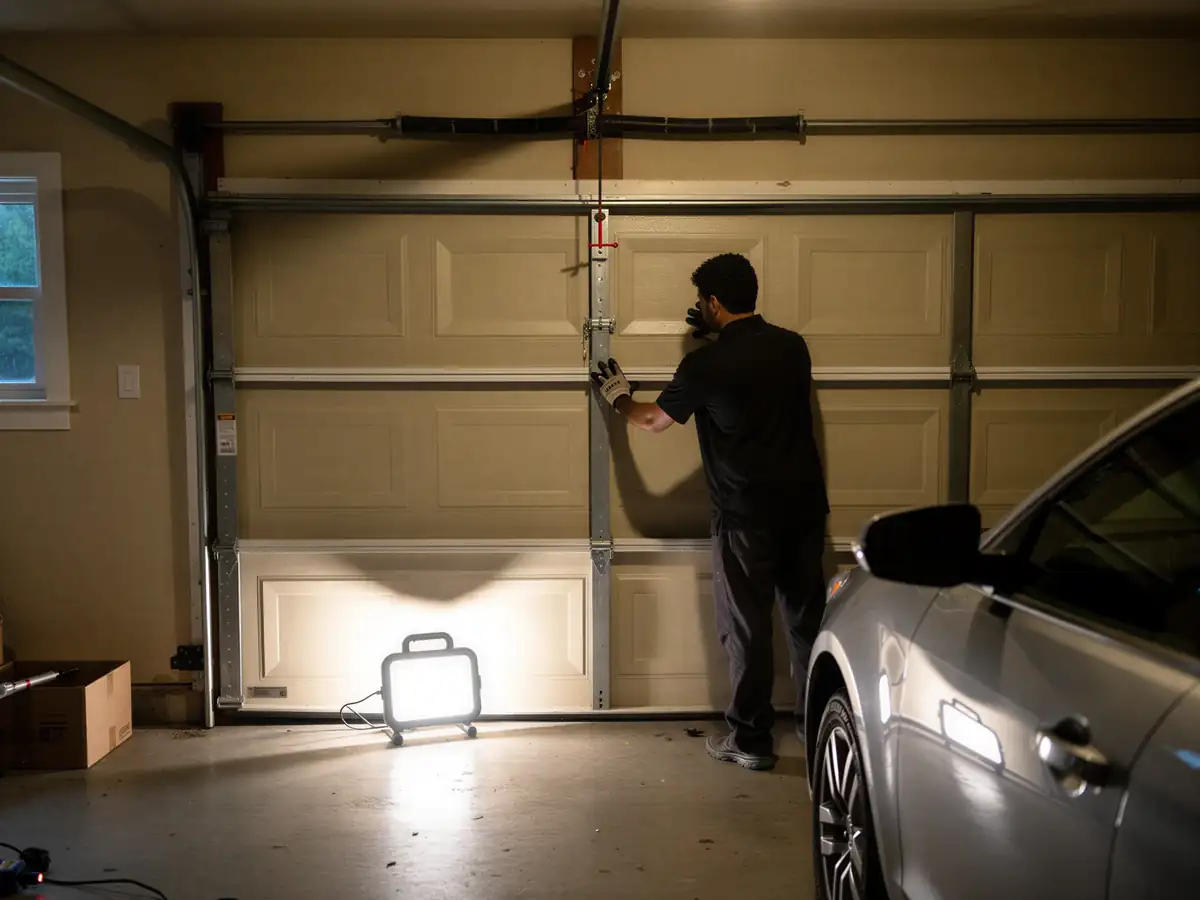
Start at the rollers. On a door built any time near the 1960s-70s stock that makes up most of this city's housing, you're likely looking at steel rollers on a track that's been bent, pinched, or worked loose from the jamb bracket over decades of use. Run your hand along both vertical tracks - if you feel a lip, a dent, or a spot where the gap between roller and rail widens, that's usually where the door jumped. Check the horizontal track too, where it meets the curve near the ceiling; that's a common failure point on older low-headroom setups still found in houses from the 1958-1979 era. Look at the lag screws holding the track brackets to the frame - in houses this age, wood jambs have often shrunk or split slightly, and a loose bracket lets the whole track rack sideways under spring tension. Also check the bottom brackets where the cables attach; a bent bottom bracket from a car bump or a slipped cable will pull one side of the door down and walk the rollers right off the rail. None of this is a five-minute fix once the door is actually derailed, but spotting which part failed tells you whether you're bending metal back or ordering a new section.
How Local Conditions Play In
St. Pete sits in a mild temperate band, so we're not dealing with freeze-thaw cycles that crack concrete slabs or swell wood framing the way colder markets see. That actually works in your favor for track alignment - the garage floor and door frame aren't moving seasonally the way they would up north. What does work against you here is humidity and salt air, especially the closer you are to the water side of the service area. Moisture gets into track brackets and roller bearings over the years, hardware corrodes a little at a time, and a bracket that's lost some grip in the wood finally gives when the spring cycles one more time. It's a slow failure, not a dramatic one - which is why a lot of homeowners don't notice the track creeping out of alignment until the day it actually pops.
What Is Going On
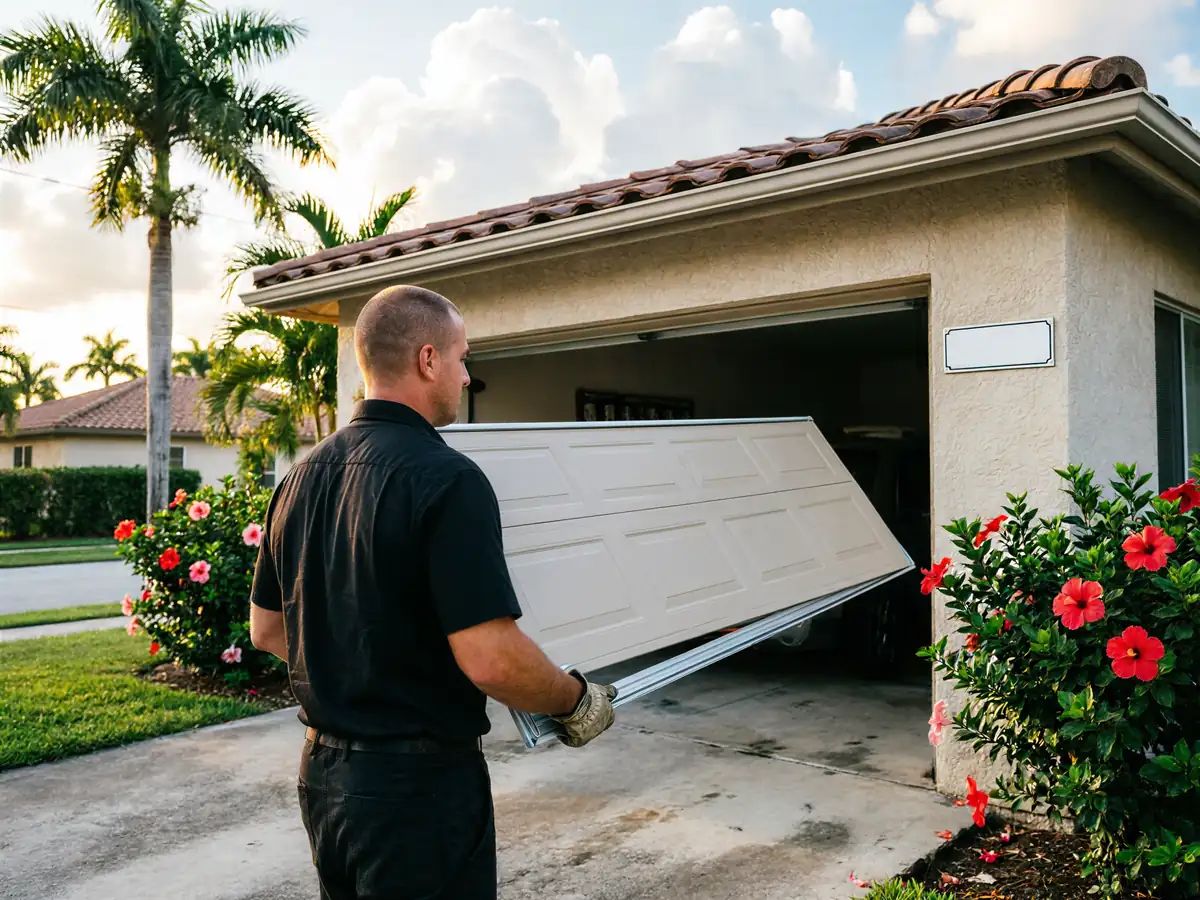
Most of the time a door goes off track because something changed at one end and not the other. A cable frays or slips off its drum, the opposite side keeps pulling, and the door goes crooked and binds against the roller on the side that's still attached. Sometimes it's simpler: a roller bearing seizes up after years without lubrication, stops turning, and starts grinding sideways against the track wall until it climbs out. On the older end of this city's housing stock - doors original to houses built in the late 1950s through the 1970s - we also see track brackets that were fine for decades and finally fatigue at the weld or the lag-bolt holes. Newer doors, on houses built after 2000, more often go off track from an impact: a car mirror, a basketball, a kid's bike clipping the bottom panel and bending a track section inward. Either way, once one bracket or roller loses its line, the door doesn't come back on its own - the cables keep winding and the whole panel gets dragged further out of square with every open-close cycle.
When to Get Help
If the door is off the track but still closed, leave it. Don't run the opener, don't try to force it back by hand, and don't cut or loosen the cables yourself - a door under spring tension that's already misaligned can come down fast and hard. Call if you see a bent track, a broken cable, or a bracket pulled away from the frame; those aren't adjustments, they're parts replacement. We'll be straight with you: if the track damage is isolated to one section and the door itself is square, that's usually a same-visit repair. If the door's original to an older St. Pete house and the whole track system is corroded or the opposite roller channel is just as worn, putting new rollers on a tired track is a short-term fix at best, and we'll tell you that instead of billing you twice.
How it works
From “it’s stuck” to “it’s fixed”
01
Tell us what’s wrong
Describe the symptom - won’t open, loud bang, opener runs but the door won’t move.
02
On-site diagnosis
A technician tests the door under power and by hand and finds what actually failed.
03
Clear, up-front plan
You get the fix that’s needed and what drives the cost - before any work starts.
04
Repaired & tested
The repair is done, the door is set true and tested, and the work area left clean.
Not sure which repair your door needs in St. Petersburg, FL? Describe what it’s doing - every job starts with a diagnosis.
No. Once a door is off track it's usually because a cable, bracket, or spring is already compromised, and the door is still under spring tension. Forcing it back by hand risks the door dropping or a cable snapping while you're near it. Leave it where it is and call for a look before touching the cables or springs.
Is this a sign I need a whole new door?
Not usually. A door off track from one bad bracket, roller, or cable is normally a repair, not a replacement. Replacement makes more sense when the track, hinges, and rollers are all worn together, which we see more on original doors from older St. Petersburg houses that have never had hardware updated.
Why does this seem to happen more in humid weather?
Humidity and salt air corrode roller bearings and track brackets gradually, even without the freeze-thaw damage colder regions get. Hardware that's lost some strength from years of moisture exposure is more likely to give out the next time the spring cycles, which is often what finally knocks a door off its track.
Ready to get your garage door sorted?
Tell us what it’s doing and where you are in St. Petersburg - we’ll take it from there.