What to Check
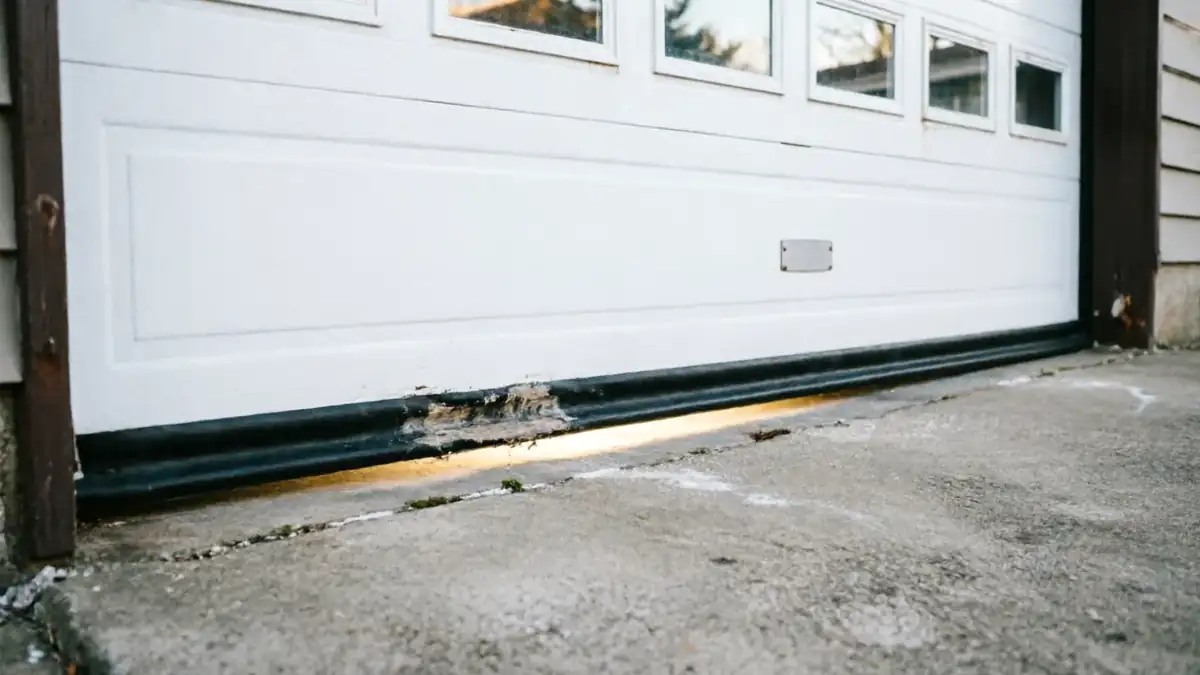
Start at the bottom seal, the rubber or vinyl strip that runs along the floor of the door
On a house built anywhere near the 1979 median age for this area, that seal has probably been replaced once already, maybe never. Pull up on it gently at the corners. If it's gone stiff, cracked, or pulled away from the track, light and air are getting under the door even when it looks closed.
Next check the side and top seals, called stop weatherstripping
Where the door meets the frame. On the 1960s-70s stock that makes up a lot of the housing here, these are often the original style of track and jamb, which means the seal has to be the right thickness to actually compress against it. A seal that's too thin for an older frame will never seal, no matter how new the rubber is.
Look for daylight gaps at the corners where the bottom seal meets the side seals
That's where draughts usually start, not along a flat run. Also check the seal between panel sections if your door has them. Run your hand along it on a breezy day. If you feel air, that's your gap, not the opener and not the spring.
How Local Conditions Play In
This area sits in a mild temperate band, so you're not fighting hard freezes that crack rubber overnight the way colder climates do. That actually works against you in one way: seals here tend to fail from UV and humidity cycling rather than cold snapping, so they go soft and gummy and lose their shape slowly instead of splitting fast and obviously. A lot of owners don't notice until the gap under the door is wide enough to see sunlight.
Humidity also swells wood jambs on older homes, especially the ones built before the stock shifted toward the newer construction seen through 2011. A jamb that's swollen slightly out of square won't let a standard seal compress evenly, so you get a draught on one side of the door and a tight seal on the other. That's a framing issue more than a seal issue, and no amount of new weatherstripping fixes it on its own.
Salt air near the coast speeds up hardware corrosion generally, but for seals specifically it's the UV and the swelling cycle, not salt, that does the damage. Keep that distinction in mind before you assume a seal problem is actually a track problem.
What Is Going On
Most of the time a draughty door comes down to one of three things: the bottom seal has shrunk and no longer reaches the floor, the frame has shifted slightly out of square with age, or the seal was never matched to the track profile in the first place. On a home from the earlier end of the 1958-2011 build range, all three are common because the original hardware wasn't designed with today's seal products in mind.
A shrunk bottom seal is the easiest fix and usually the real culprit. Rubber shortens as it ages, especially after years of expansion and contraction, so a seal that fit snug when installed can end up a half inch short years later. You'll see this most on original doors that haven't had any seal work done since the house was built.
An out-of-square frame is tougher. If the gap is wider at one top corner than the other, or the door drags before it fully closes, the opening itself has moved slightly, which is normal after a few decades of settling. A new seal will mask some of that but won't correct it.
When to Get Help
If swapping the bottom seal and stop weatherstripping doesn't close the draught
Don't keep buying seal after seal hoping one will finally fit. That's money spent chasing a frame problem with a rubber solution. Call at that point so someone can check whether the track or jamb needs adjusting instead.
We're straight about this one
We don't do framing or structural carpentry work, so if the opening itself needs rebuilding square, that's a call for a contractor, not us. What we do handle is the door side of it, matching seal profile to your track, adjusting hardware so the door sits flush, and replacing bottom seals that have shrunk past the point of doing their job.
If you're not sure whether what you're feeling is a seal gap or something with the spring or opener pulling the door unevenly, that's worth a second opinion too
Since a door that doesn't close level will never seal right no matter what weatherstripping you put on it.