How It Shows Up
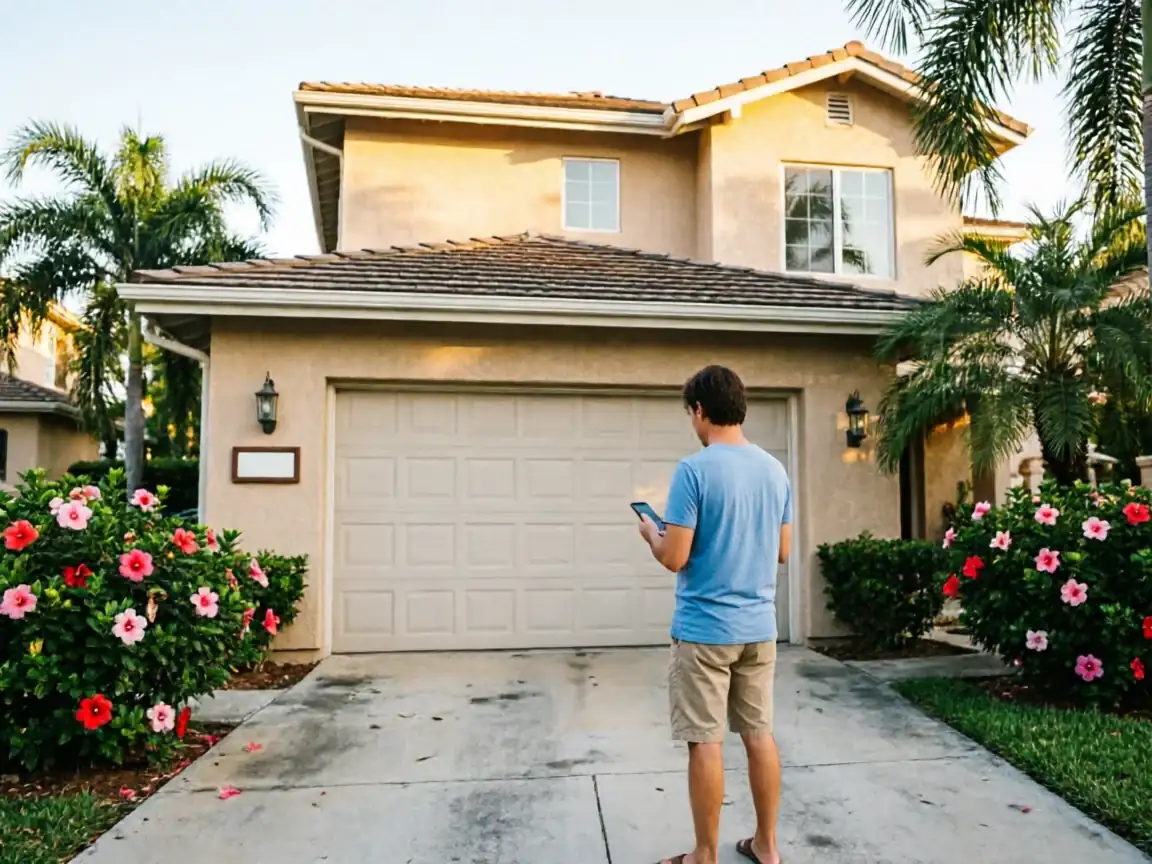
Most of the calls we get from Treasure Island start the same way
The door sticks halfway up, or it slams down faster than it should. That's not random. Most garages on this barrier island went up around 1973, roughly a decade after a lot of the inland St. Petersburg neighborhoods we also cover. That matters because the hardware from that build wave was sized for lighter steel doors than what homeowners buy today, and thirty-plus years of salt air moving off the Gulf has worked on every exposed bolt and bracket since.
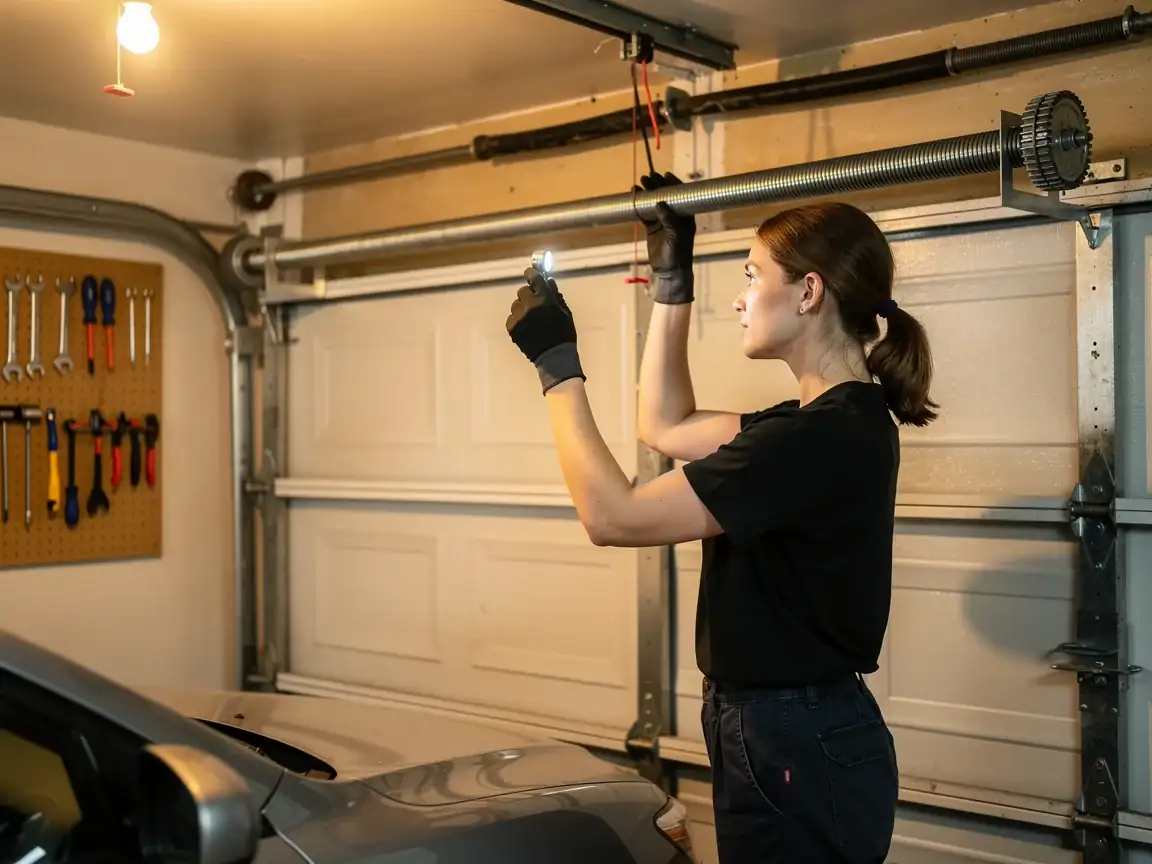
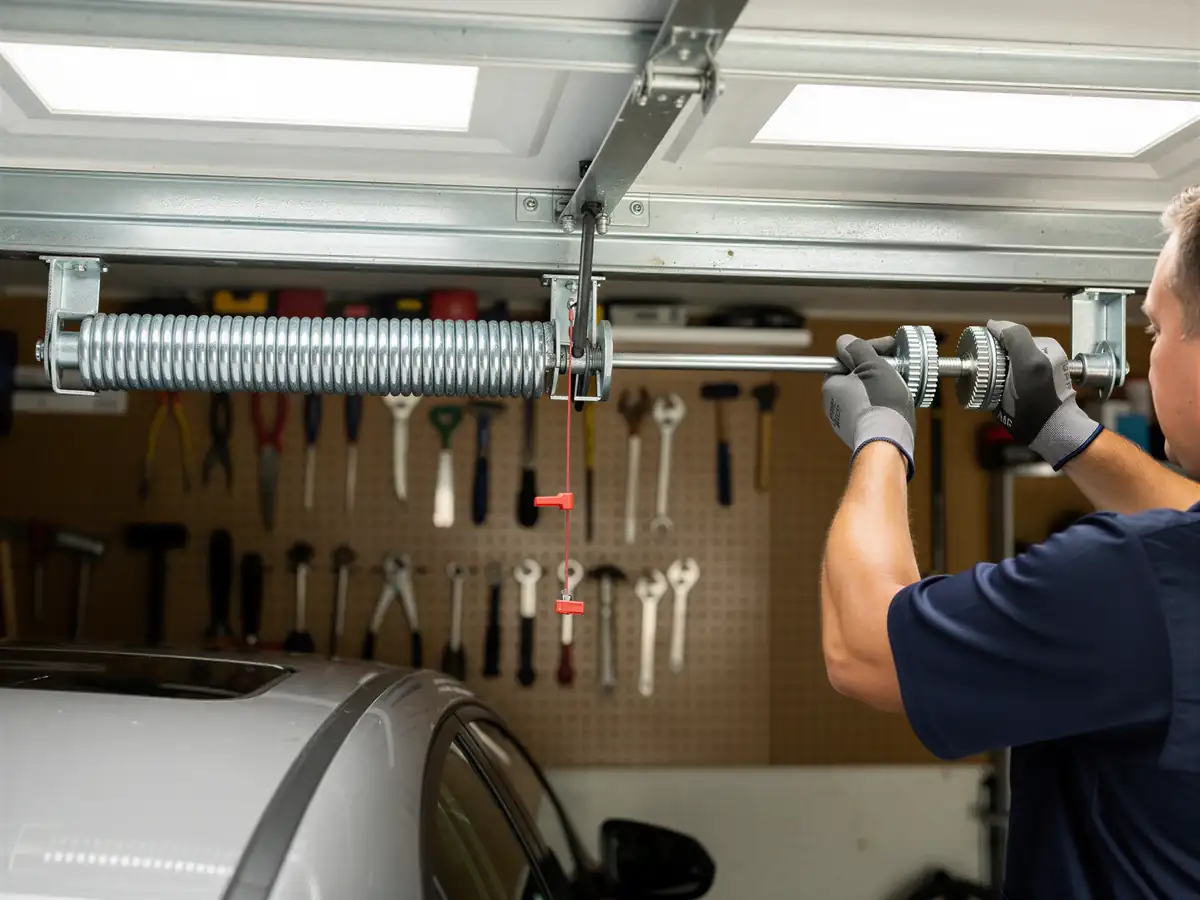
We see galvanized torsion springs that have lost their coating and started pitting
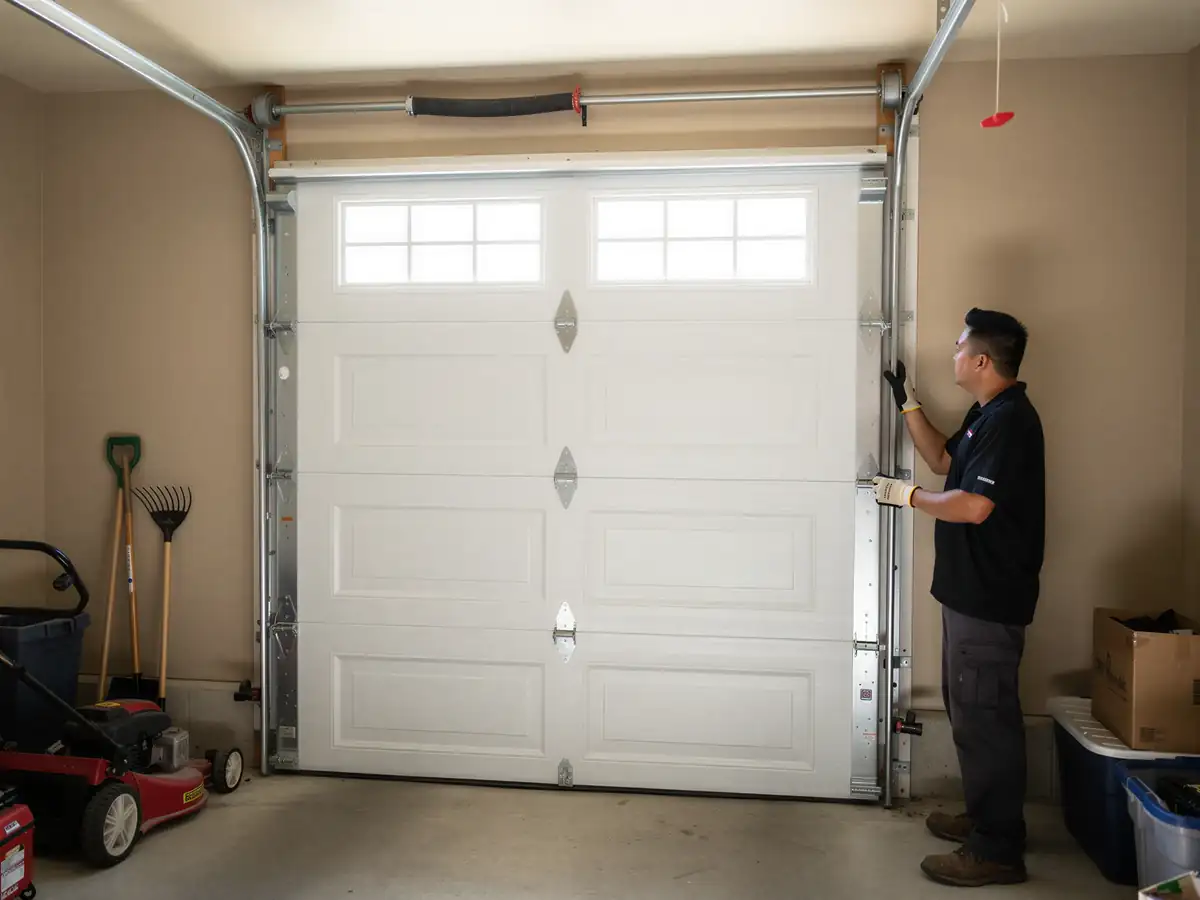
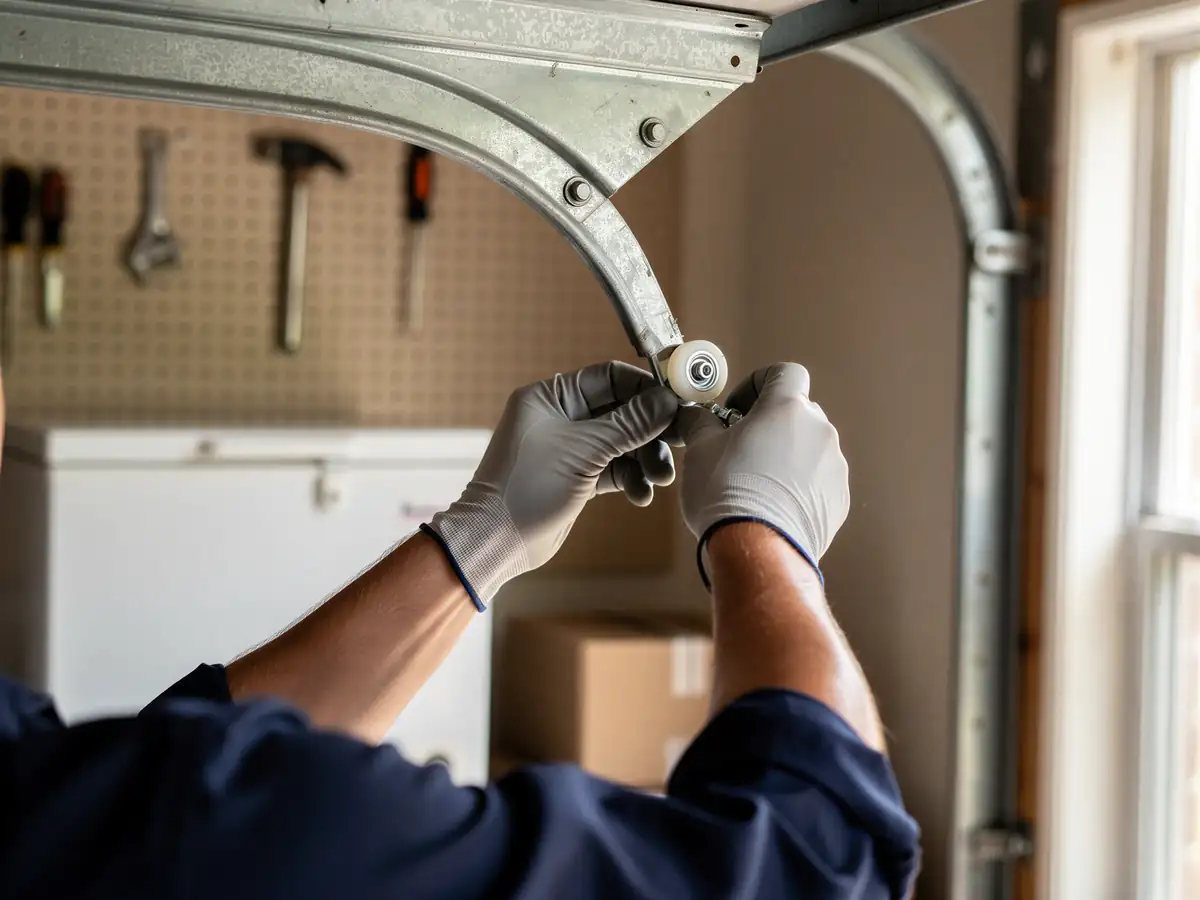
Rollers that have worn their track grooves wide, and center hinges with play in them that wasn't there when the door was installed. On a 1973 door, the opener is often a second- or third-generation replacement bolted onto original track that was never meant to carry today's heavier insulated panels. That mismatch is where a lot of the noise and the jerky travel comes from, not from any one broken part.
How We Fix It
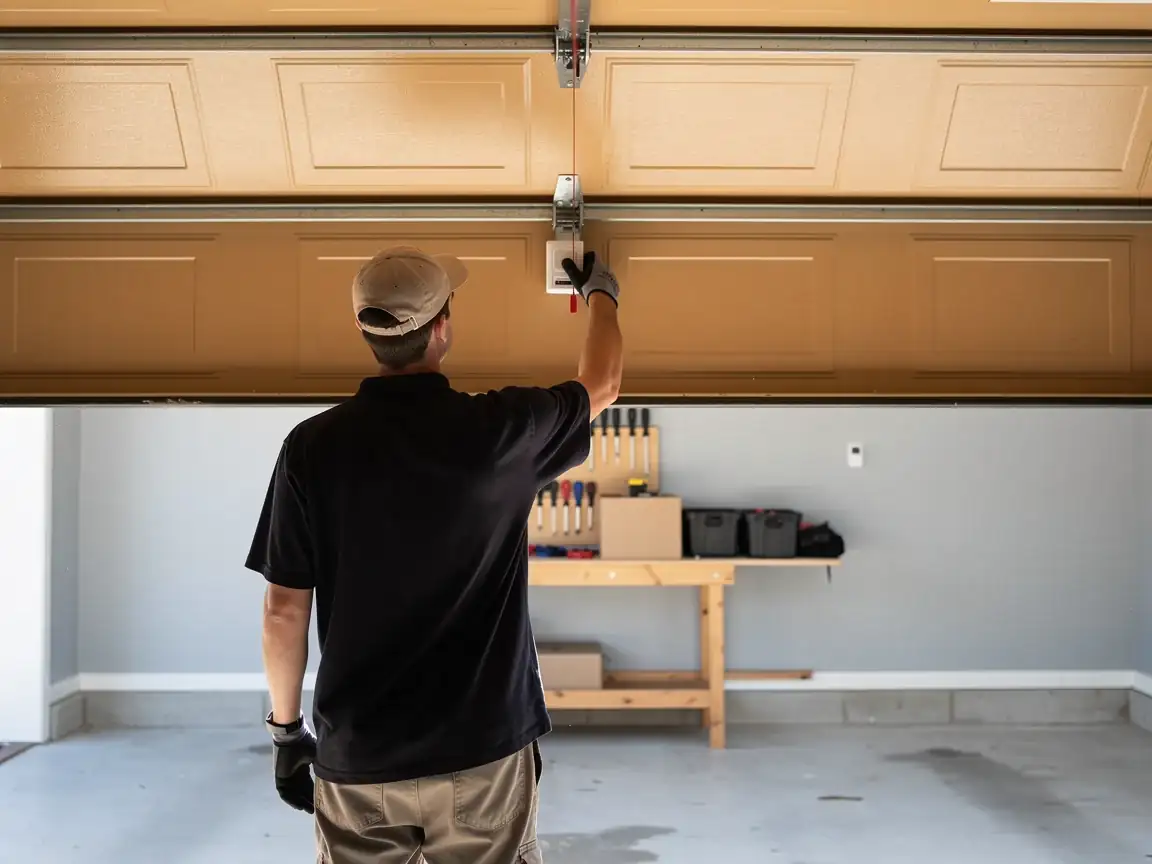
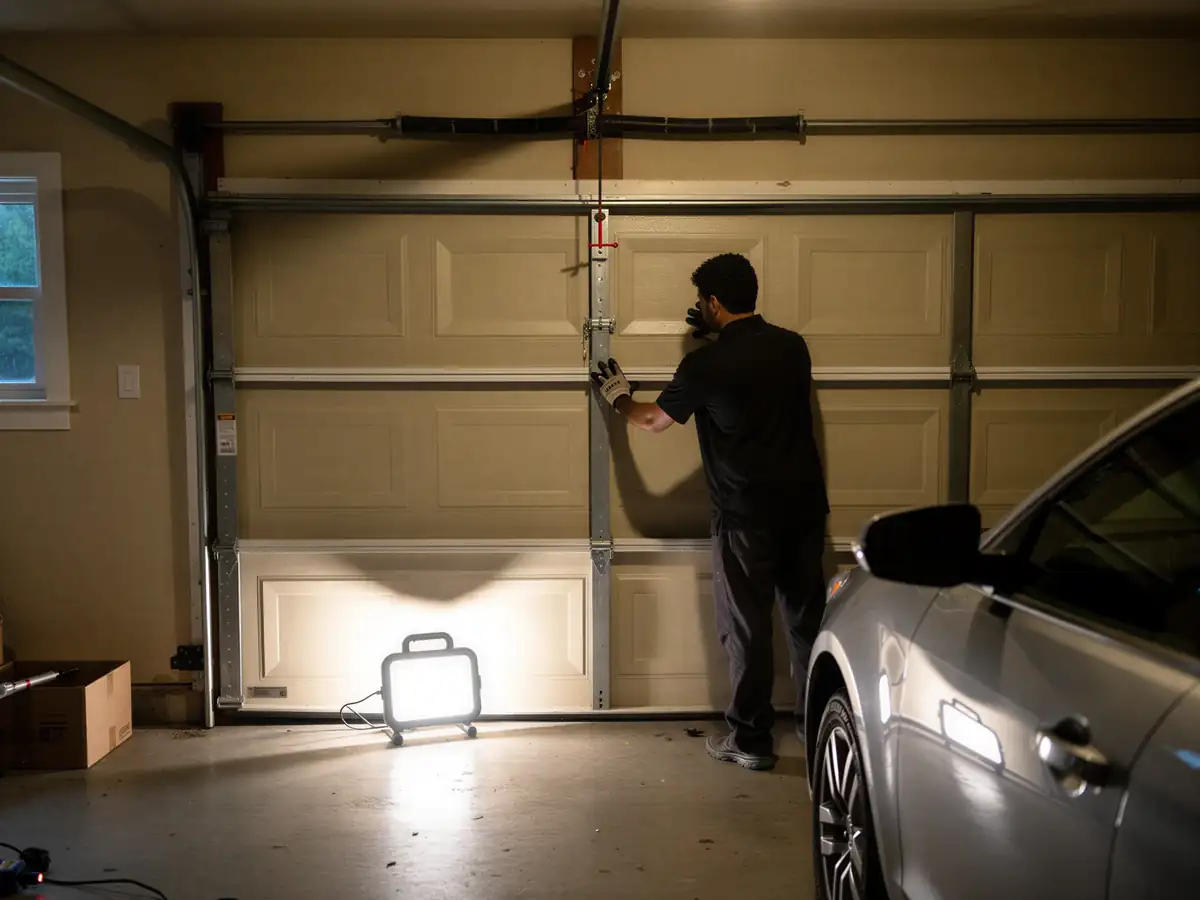
We start by running the door by hand, disconnected from the opener, to feel where the resistance actually is before we touch a spring or a cable. On Treasure Island jobs specifically, we check fasteners and hinge pins for corrosion first, because a bolt that's rusted thin will strip before it breaks, and that changes how we approach the repair.
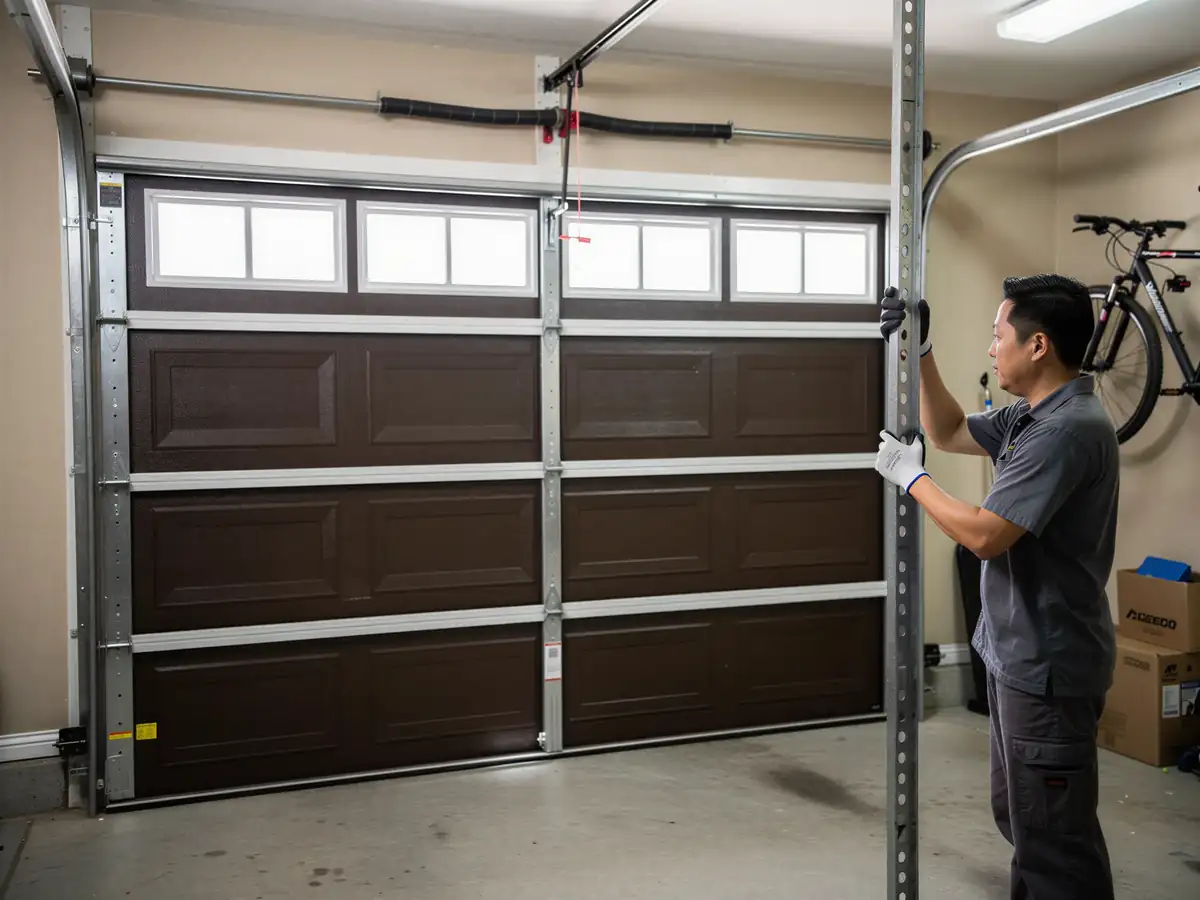
If the springs are original or close to it, we replace both as a pair, even if only one has failed; a 1973-era door with one new spring and one fifty-year-old spring will pull unevenly and wear the new one out early. Track gets straightened or swapped depending on how deep the roller grooves have worn. Openers on these homes are usually not original, so the fix there is often a logic board or a gear kit rather than a full swap.
We don't repaint or refinish panels as part of a repair call. If the steel skin is rusted through from years of coastal air, that's a replacement conversation, not a patch job, and we'll tell you that straight rather than charge you for a fix that won't hold.
Where This Job Goes Sideways
The thing that turns a simple spring job into a bigger one on this island is corrosion nobody can see until the door's apart. A bracket that looks solid from the outside can be rusted through on the back face where it's bolted to the jamb, and once we pull it, that's a structural fix, not a hardware swap.
With roughly 3,776 households on Treasure Island and a median income of $82,340, we find owners here are more willing to replace a door outright once we show them what's actually underneath the trim, rather than keep patching a frame that's fighting the salt air. That's a judgment call we make with you at the house, not over the phone, because every door's corrosion pattern is different even on the same street.
The other place this goes sideways is scheduling. We run out of St. Petersburg, 8 miles away, so same-day isn't something we promise sight unseen on a first call. We'll tell you honestly where you land in the day's run when you call.
Booking a Visit
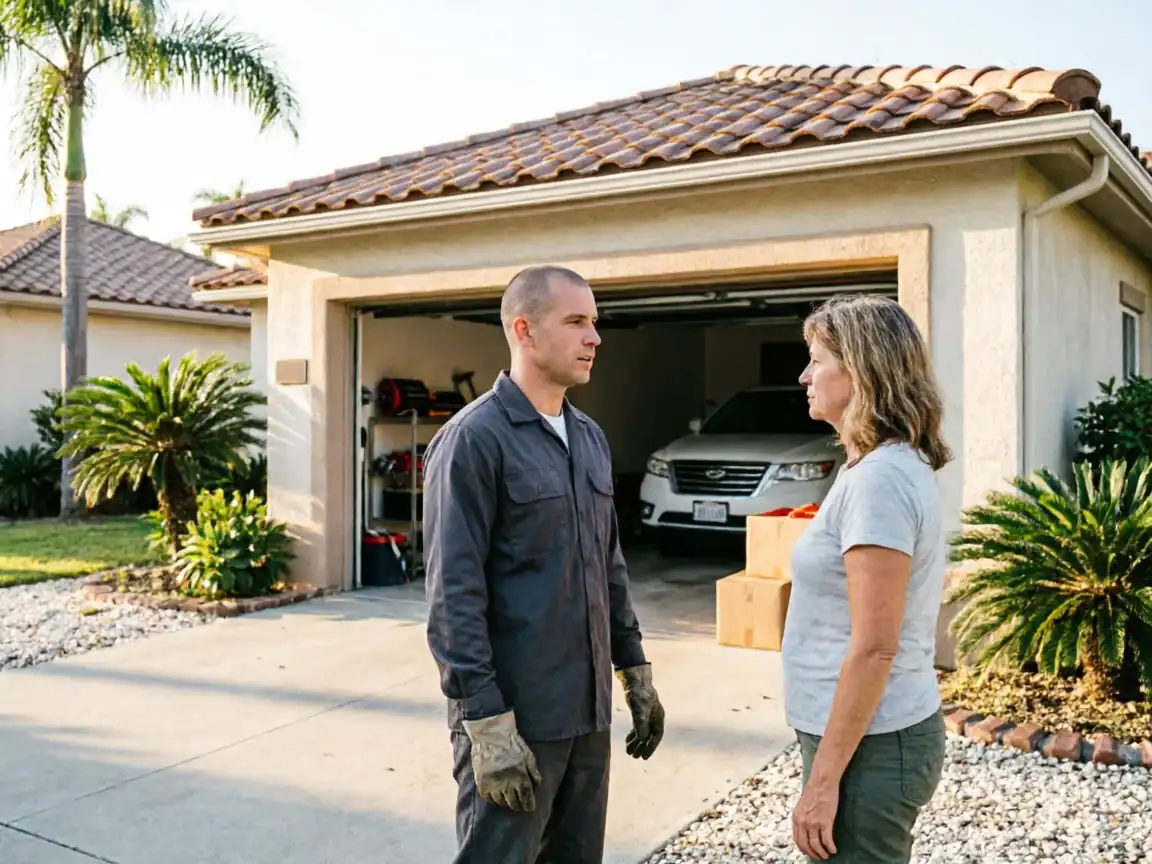
Call and tell us what the door's doing, not just that it's broken
"It won't go down past halfway" and "it slammed shut on its own" point us toward different parts before we've even loaded the truck. If you know roughly how old the door is, that's useful too, since a door original to a 1973 build gets a different first look than a ten-year-old replacement.
Because we're coming from St. Petersburg, 8 miles out, we group Treasure Island calls with nearby stops where we can
Including Gulfport and St. Pete Beach, so tell us if timing flexibility helps you get a better window. We'll give you a real estimate range once we've seen the door, not a number pulled from a phone call, since corrosion and hardware age on homes out here vary more than the build year alone would suggest.
- 8 miles
Doing It Yourself
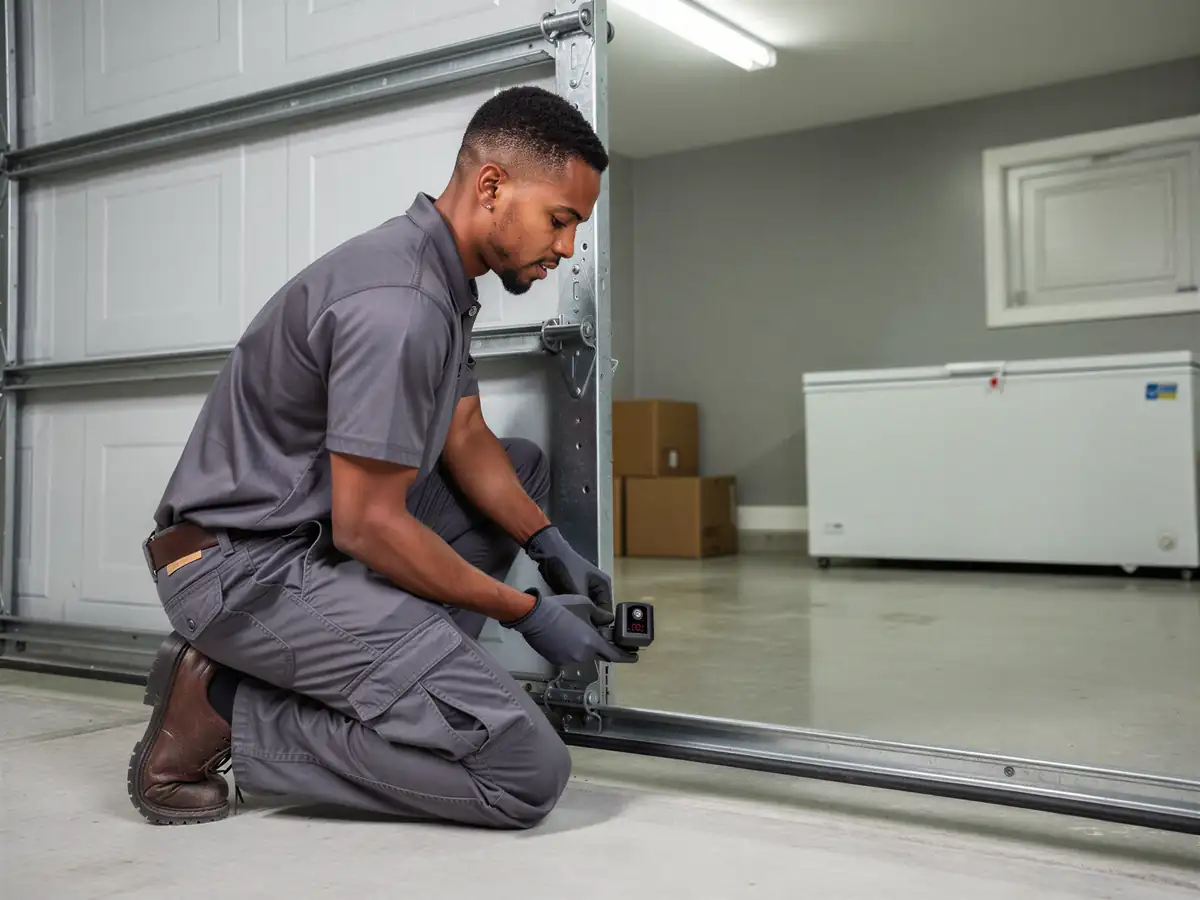
There's a short list of things worth doing yourself before you call anyone. Clearing the photo-eye sensors near the bottom of the track and making sure nothing's blocking them solves more "broken opener" calls than people expect. Checking that the wall switch and remote both fail the same way tells you whether the problem is the opener or something upstream in the power.
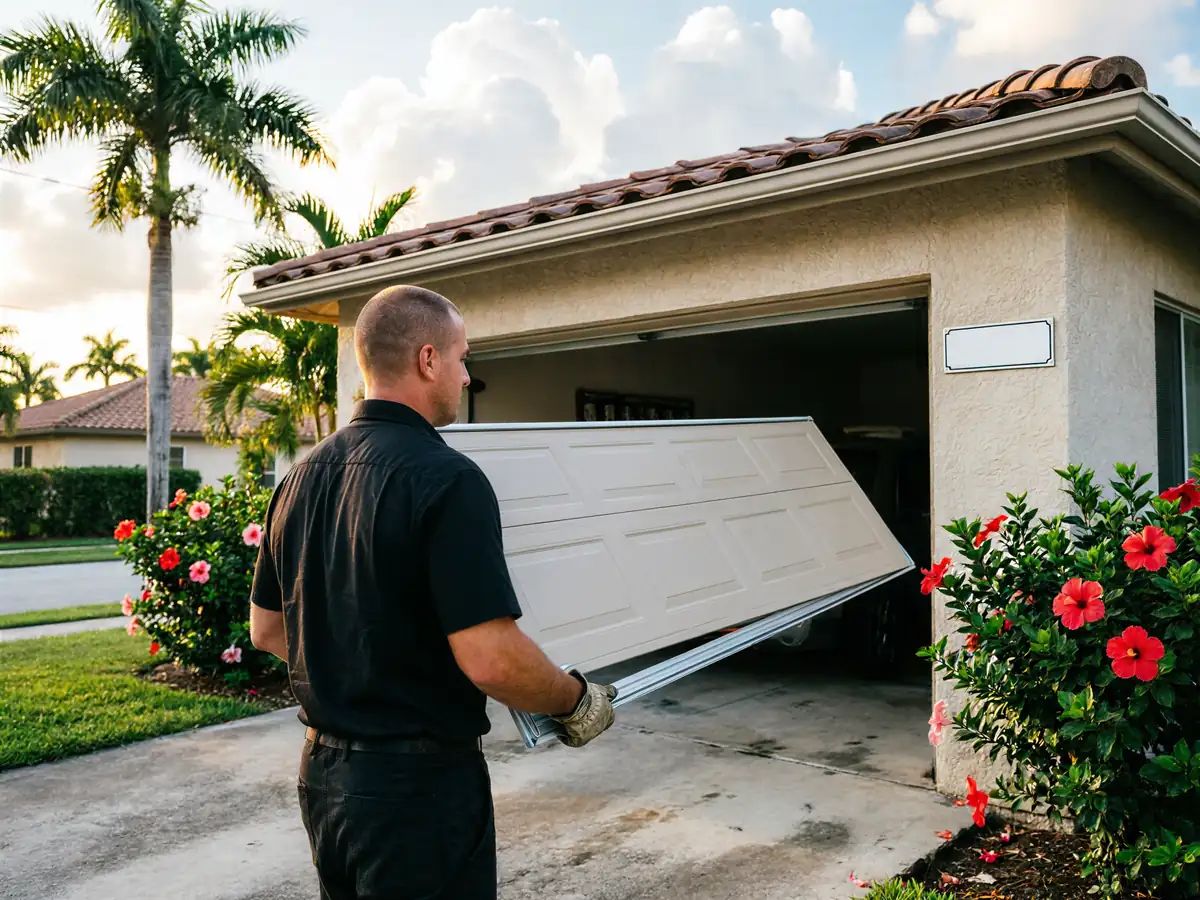
What you shouldn't touch: the torsion spring itself. On a door this age, the spring is under enough tension to cause a serious injury if it lets go while you're working on it, and on a 1973-era setup we often find the winding cones themselves are worn enough that they don't behave the way a newer part would. If the door is off its track, or a cable has jumped the drum, leave it where it sits and call. Moving a door on a partly-detached cable can bend the track in a way that turns a cable job into a track-and-roller job.