How Long It Takes
A broken torsion spring on a single door is usually a same-visit fix once the truck is on site
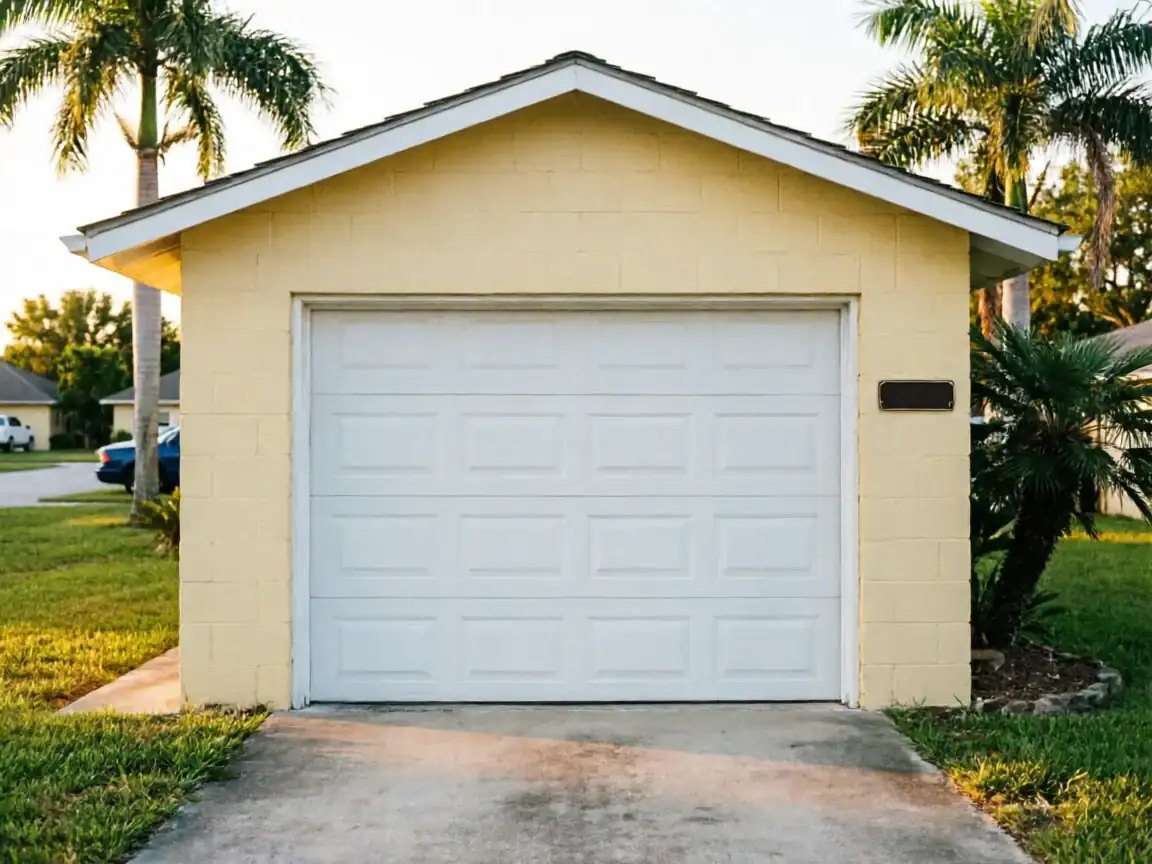
The work itself runs under an hour for a straight swap. What slows a Lealman call down isn't the labor, it's the hardware. Lealman's housing stock runs older than the St. Petersburg median of 1979; the typical home here went up around 1968, closer to the front edge of the area's 1960s-70s build wave. That means more original torsion tubes, center brackets, and stationary cones that haven't been touched since the house was framed. If the drum or shaft is pitted or undersized for a current door, we're not just swapping a spring, we're matching it to parts that predate the current standard sizing. That adds time on site, not because the job is hard, but because nothing about it is a stock universal part.
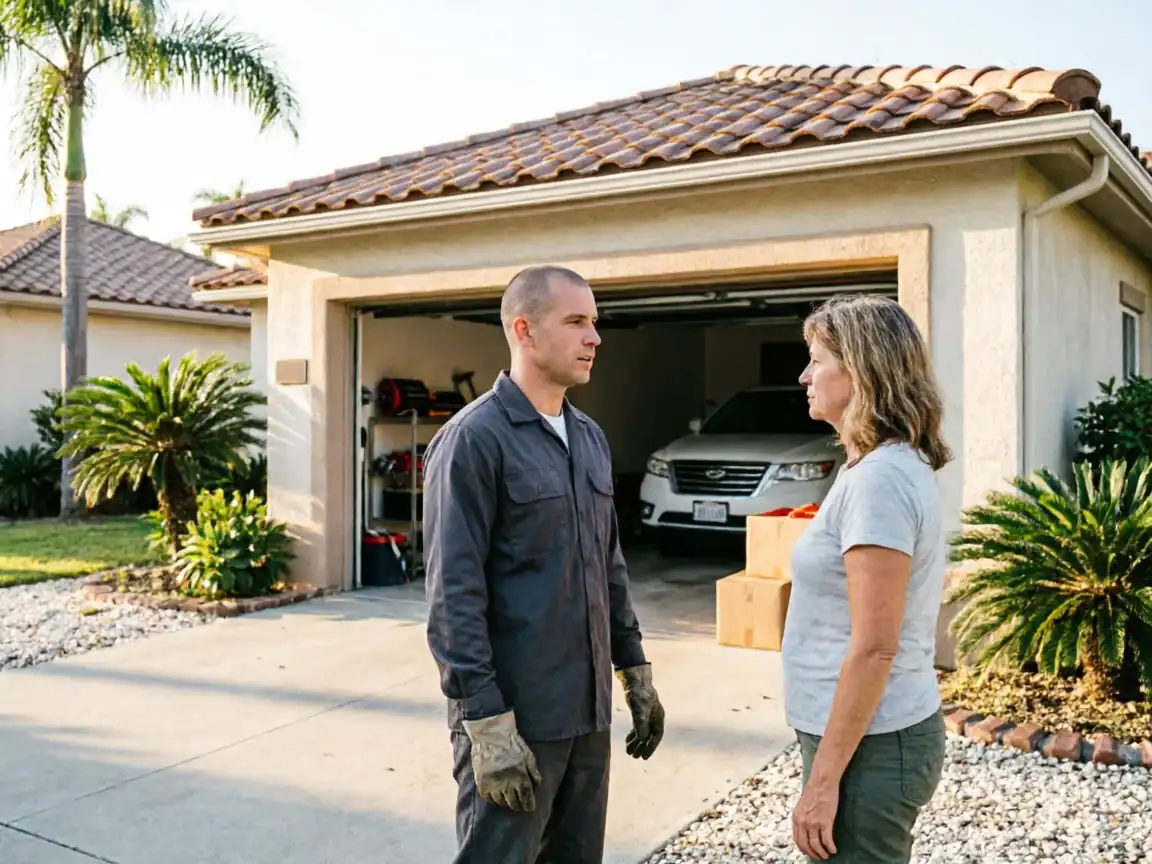
We travel to Lealman from St. Petersburg, about 5 miles out
So we don't keep a local staging point here - the truck carries a working range of spring sizes, but an unusual original-era cone or an obsolete drum occasionally means a short return trip once the exact part is confirmed. We'd rather tell you that up front than guess wrong on the first visit.
- 5 miles
Why It Happens Here
Springs fail on a cycle count, not a calendar date, but age of the installation still matters - older torsion hardware wasn't built to today's cycle ratings, and decades of door use wear it down regardless of climate. Lealman sits in the same mild temperate band as the rest of the service area, so you're not fighting the freeze-thaw cracking that snaps springs up north. What you are fighting is time: a spring installed when a 1968-era house was built has had over fifty years of door cycles to fatigue, even in gentle weather. We see more snapped or badly stretched springs on original hardware here than on the newer builds nearer the coast, simply because there's more original hardware left to fail.
Income and household size shape the call too, in a quieter way. Lealman's median household income runs well under the wider service area's $79,798, and with roughly 8,773 households in the area, a lot of these doors get repaired rather than replaced outright when a spring goes - which is usually the right call for a sound door with tired hardware.
Parts We Carry
For a 1968-era door, the common failure is a single torsion spring sized for a lighter, older panel - often paired with a center bracket style that's no longer the current default. We carry a working range of torsion springs on the truck along with standard extension springs for the smaller run of older doors still using the side-mount setup instead of a centered torsion bar. What we won't do is force a current off-the-shelf spring onto an incompatible drum just to finish faster - if the shaft or drum size doesn't match, the spring will cycle wrong and fail again inside a year.
Cables, end bearings, and center brackets ride along too, since a spring failure on an older setup often takes a cable or bearing with it. If your door needs a part genuinely outside what's on the truck - an obsolete cone size, say - we'll say so rather than install something that's close enough for now and wrong by next summer.
How We Fix It
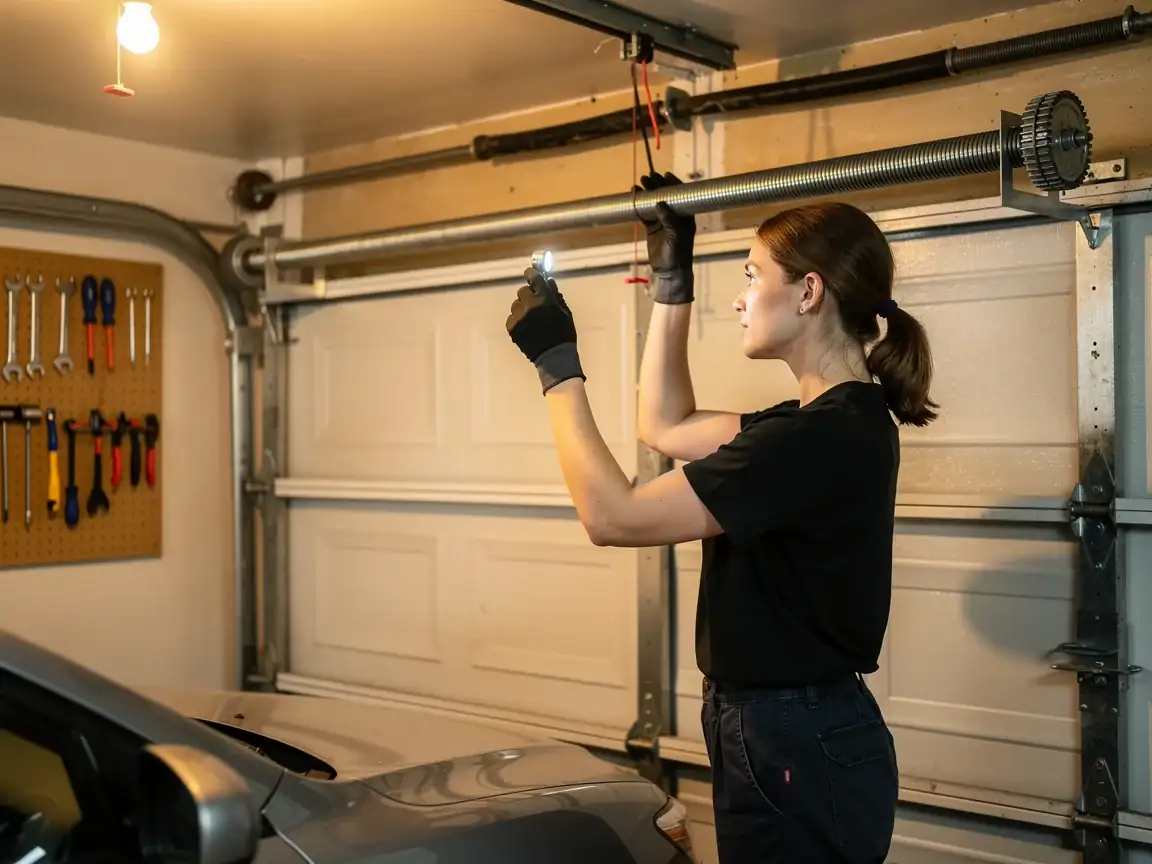
First, we check which spring type is actually on the door
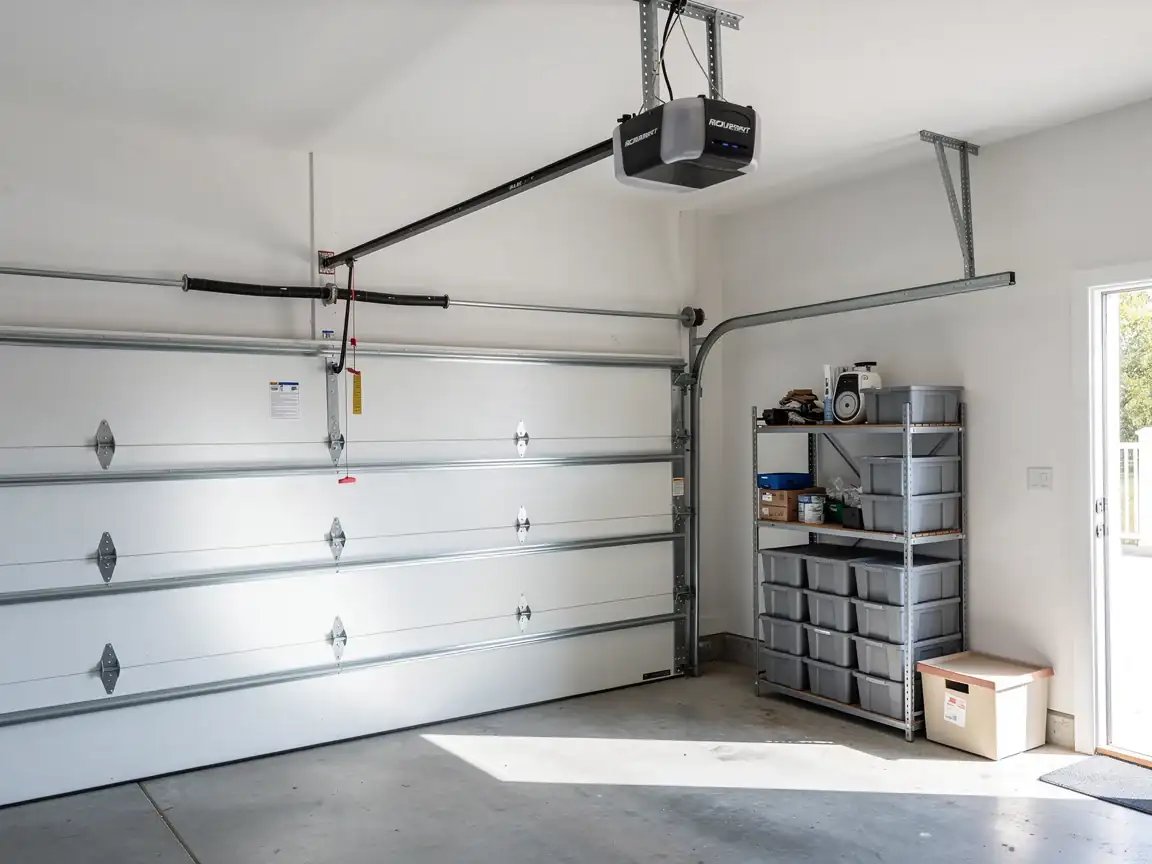
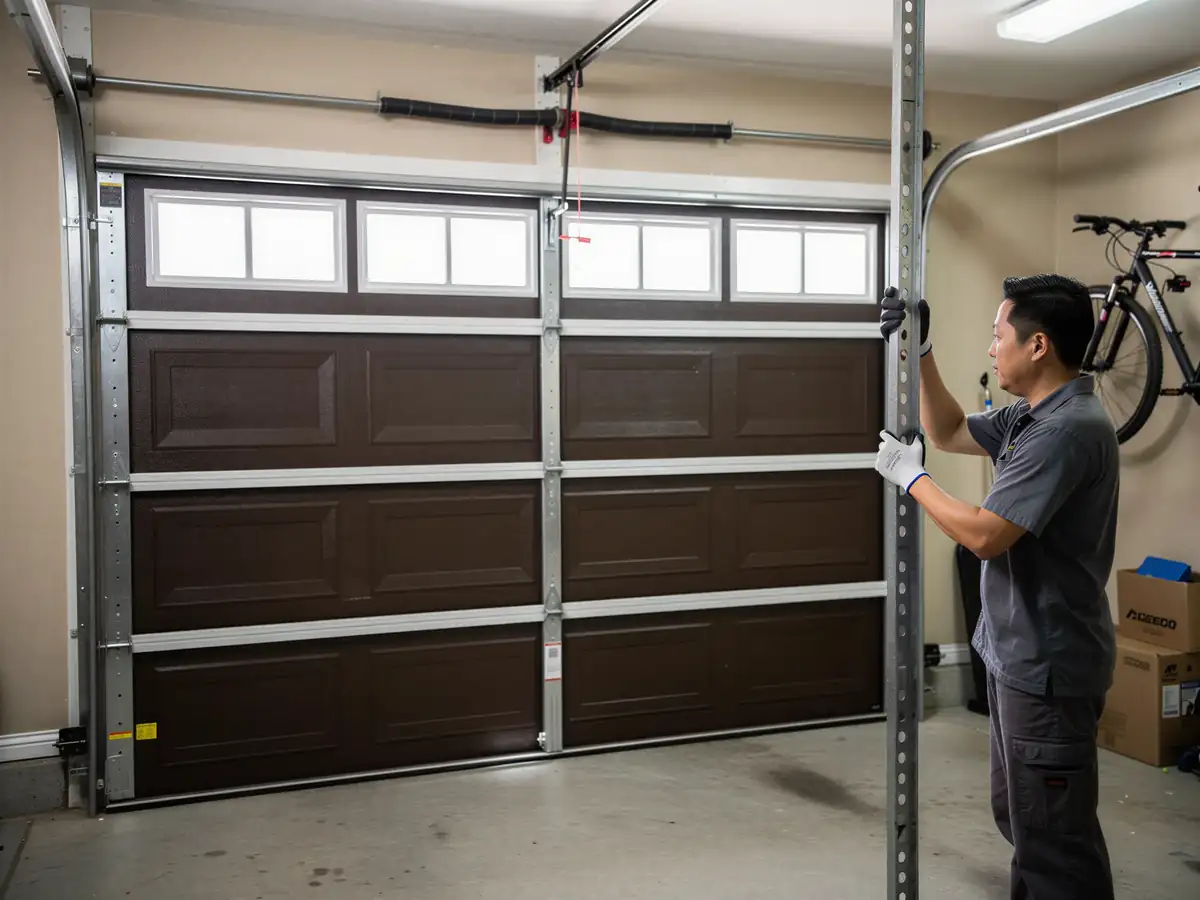
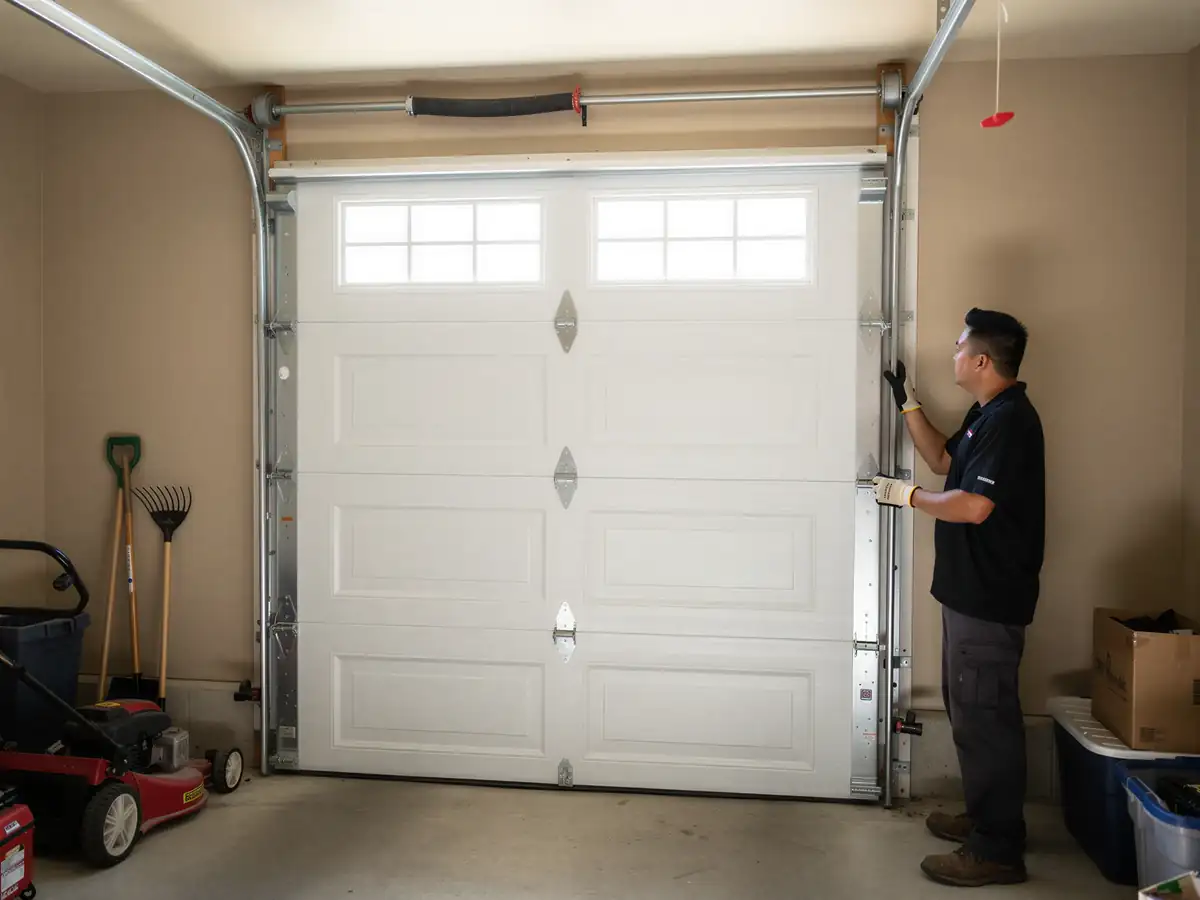
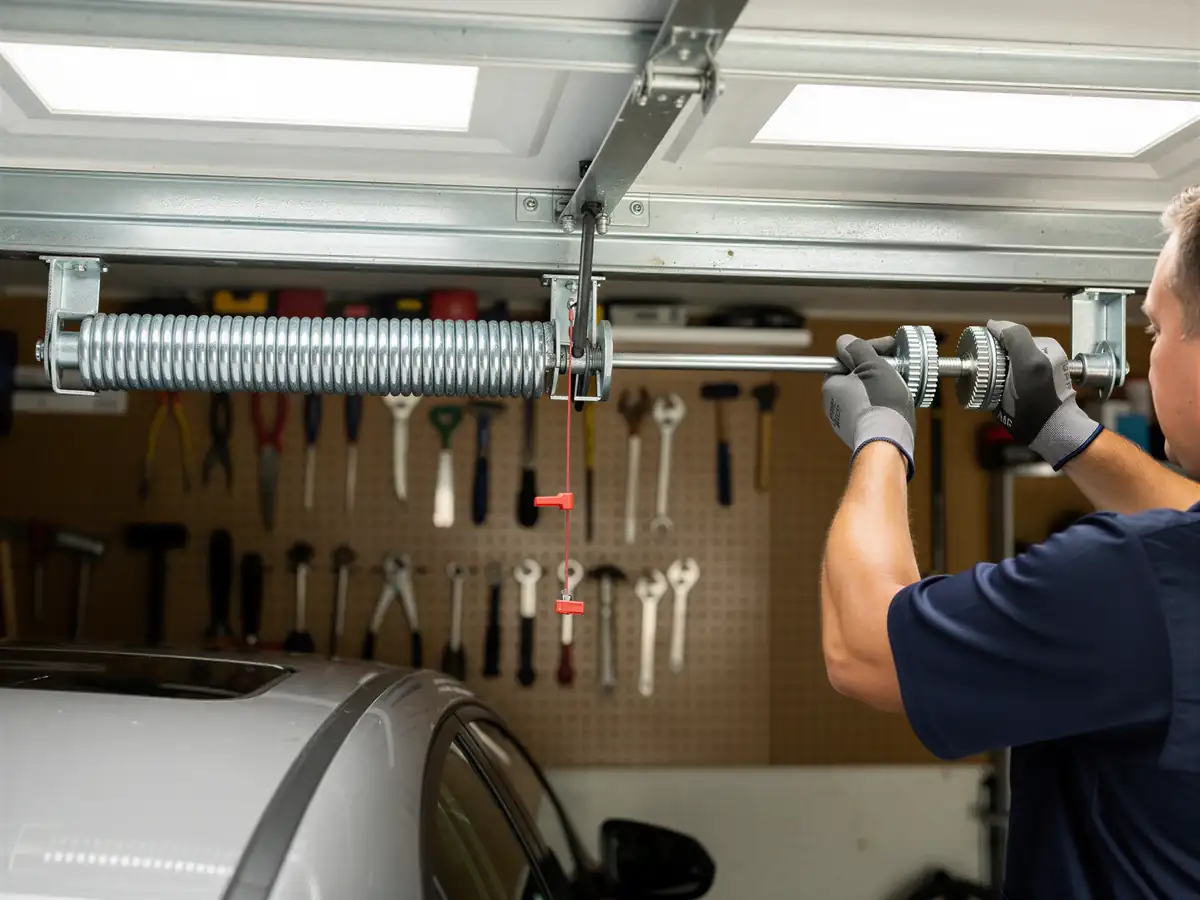
Torsion bar centered above the opening, or the older side-mounted extension pair - because the two repairs don't share tools or parts. On torsion jobs we unload the opposing spring fully before touching anything, confirm the drum and shaft aren't worn past spec, then wind in a matched replacement and test the balance by hand at several points on the track, not just at the bottom.
On older extension setups we check the pulley and safety cable condition at the same time
Since those tend to wear alongside the spring on a house this age. Either way, the door should hold a static position roughly halfway up without the opener holding it - that's the real test of a correct spring weight. We don't leave until it passes that check.
Booking a Visit
Call to set a time and describe what the door's doing - won't lift, slams down, cable hanging loose - and we'll tell you roughly what's involved before the truck leaves St. Petersburg. If the issue sounds like something bigger than a spring, like a bent track or a worn opener gear, we'll say that on the phone rather than let it turn into a surprise on site. For the full rundown of what we handle in Lealman beyond spring repair, see our Lealman garage door repair page. If you're comparing this against the main St. Petersburg service page, that's here: garage door spring repair in St. Petersburg.
Doing It Yourself
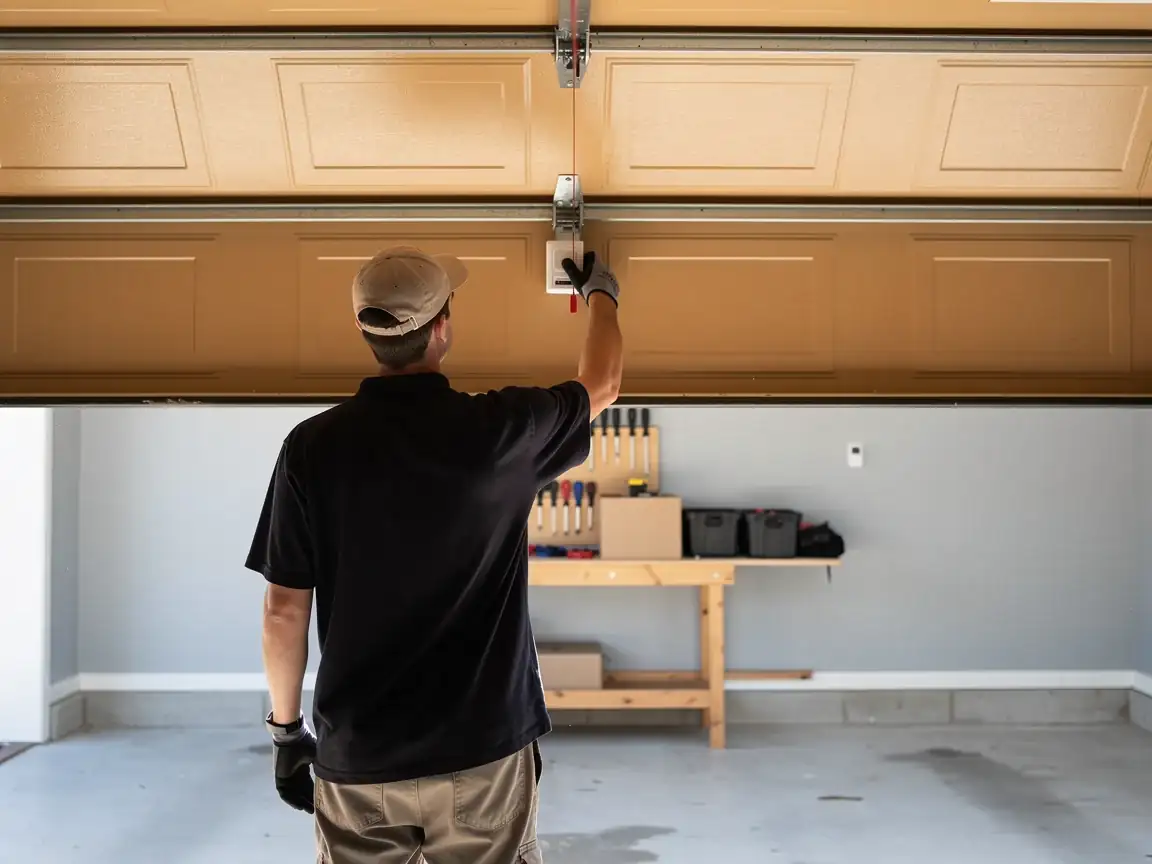
Don't. A wound torsion spring holds enough stored force to break a wrist or worse if the winding bars slip, and that risk doesn't scale down just because the door looks old and simple. What you can safely do yourself: pull the emergency release and lift the door by hand to confirm it's actually a spring problem and not a bent track or broken opener gear - if it's heavy, uneven, or won't hold a halfway position, that points to the spring.
On a door this age, we'd also flag that a spring swap sometimes surfaces a second problem - a worn bottom bracket or a rusted cable - that wasn't obvious until the door's moving freely again. We'll always show you what we find before replacing anything beyond the spring itself, so you're not paying for guesses.