What You Pay
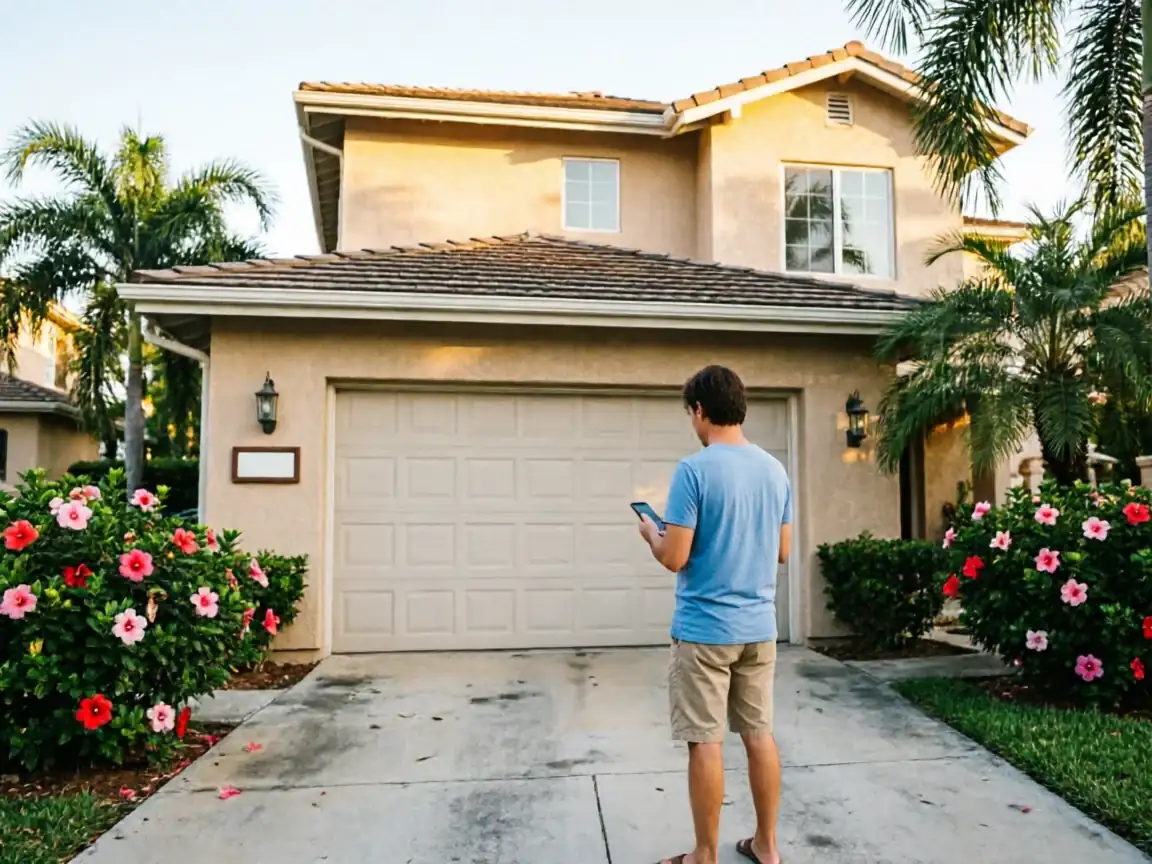
Pinellas Park homes cluster tightly around a median build year of 1978
Which puts most garage doors here on hardware from the back half of the 1970s - a narrower window than you'll find across the wider St. Petersburg service area, where the housing stock spans 1958 to 2011. That matters for cost: a tighter build era means more doors sharing the same generation of torsion springs, same style of track brackets, same panel gauges. When a part fails, there's a decent chance we've already priced the same fix on three other houses on the same block.
Median household income in Pinellas Park sits at $62,043
Noticeably under the $79,798 figure for the broader service area. We don't change our rates by zip code, but we do pay attention to which jobs are worth a full section swap versus a targeted repair, because a lot of households here are weighing that tradeoff closely. A cracked bottom panel on a door that's otherwise sound doesn't need a new door. A spring that's seized because it's original to a 1978 build usually does need replacing, not lubricating.
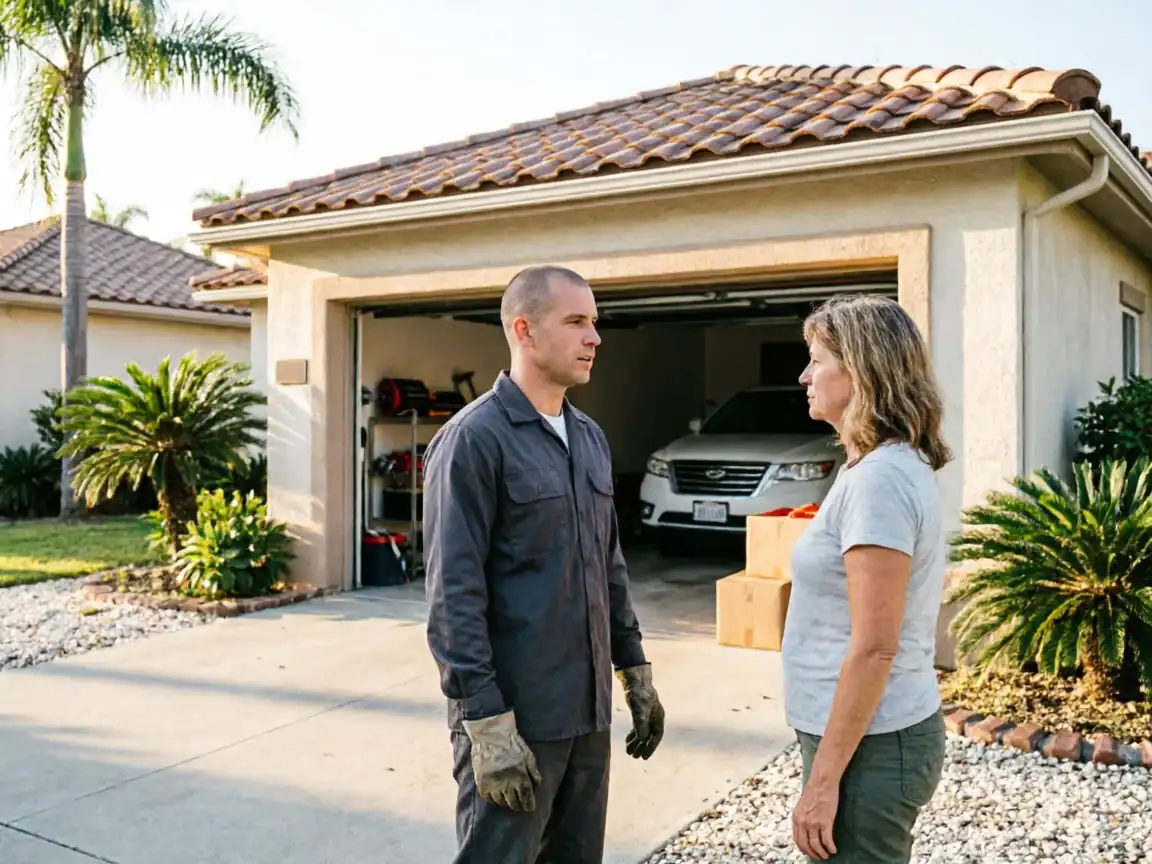
We travel to Pinellas Park from St. Petersburg, about 8 miles out
So quotes account for that trip rather than a flat in-town rate.
- 8 miles
Where This Job Goes Sideways
The failure point we see most in this part of the county is original torsion hardware that's never been touched since a house went up in the late 1970s. Steel that's sat under Florida's mild temperate conditions for four-plus decades doesn't rust out dramatically - it just loses tension and wears thin at the stress points, and it tends to go quietly rather than with a loud bang. Homeowners often don't notice until the door won't lift past waist height.
Another place this goes wrong: DIY spring swaps on doors from this era use older winding cone styles that don't match what's sold in most hardware store kits today. Mixing a new spring with a decades-old drum or shaft can throw the whole system out of balance, which shows up as a door that slams on the way down or an opener that strains and burns out early.
With 21,805 households in Pinellas Park, there's a lot of this exact hardware generation still in service, and it's reaching the point where failures cluster rather than trickle in.
Doing It Yourself
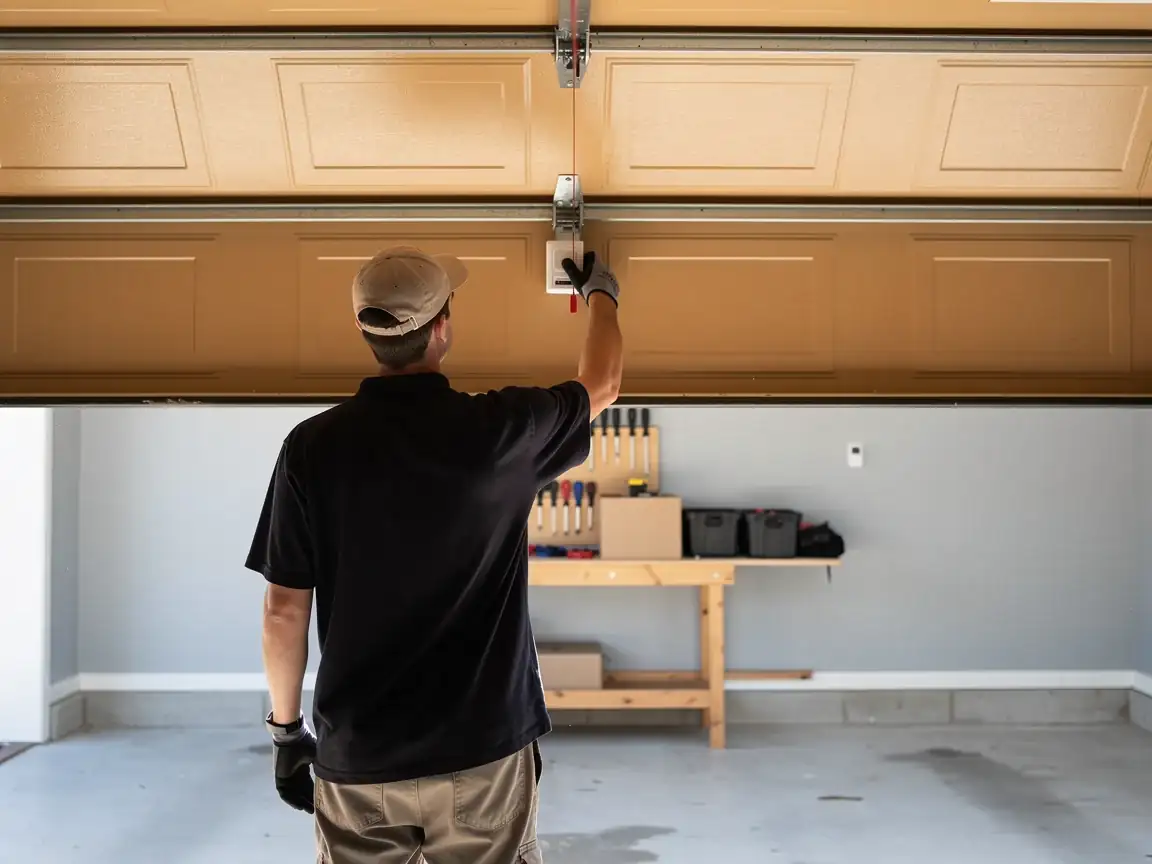
If you're comfortable with tools, some things are fine to handle yourself: tightening loose hinges, lubricating rollers and hinges with the right garage-door-rated grease, clearing track debris, replacing weatherstripping along the bottom edge. None of that requires touching a spring under tension.
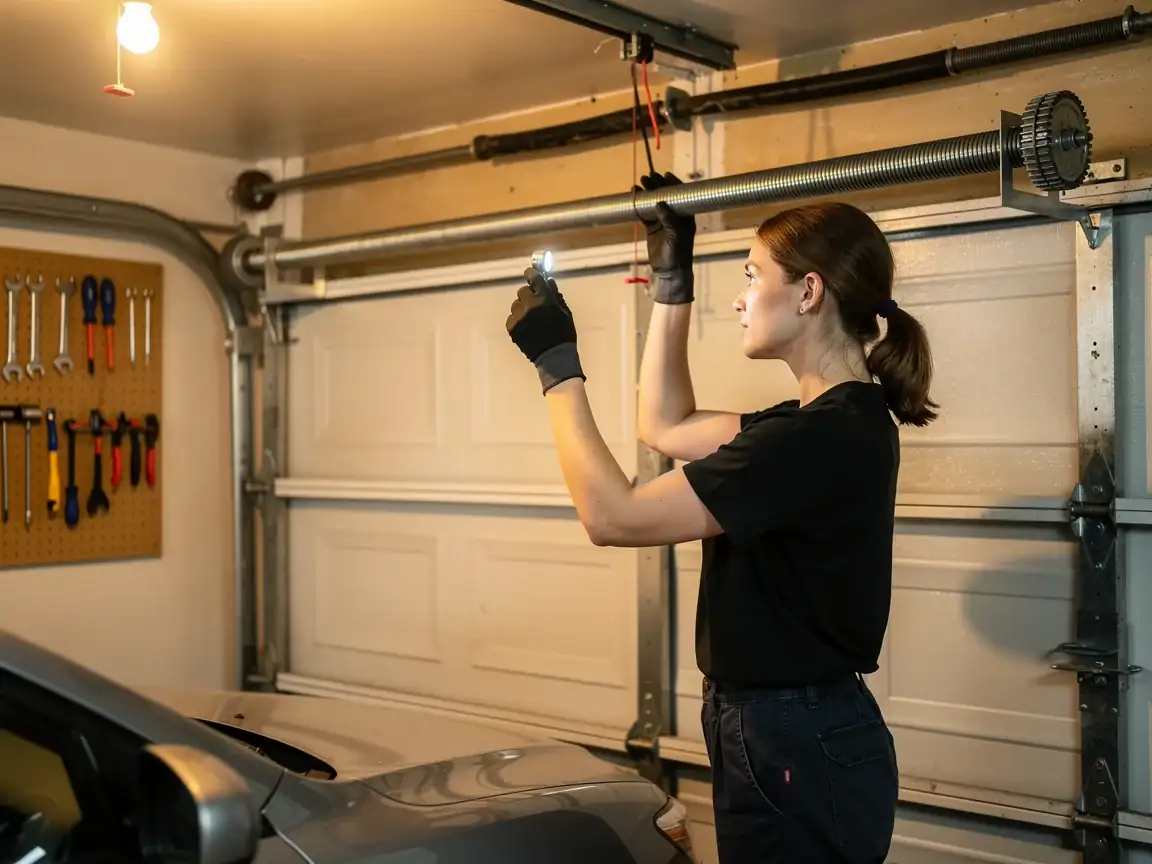
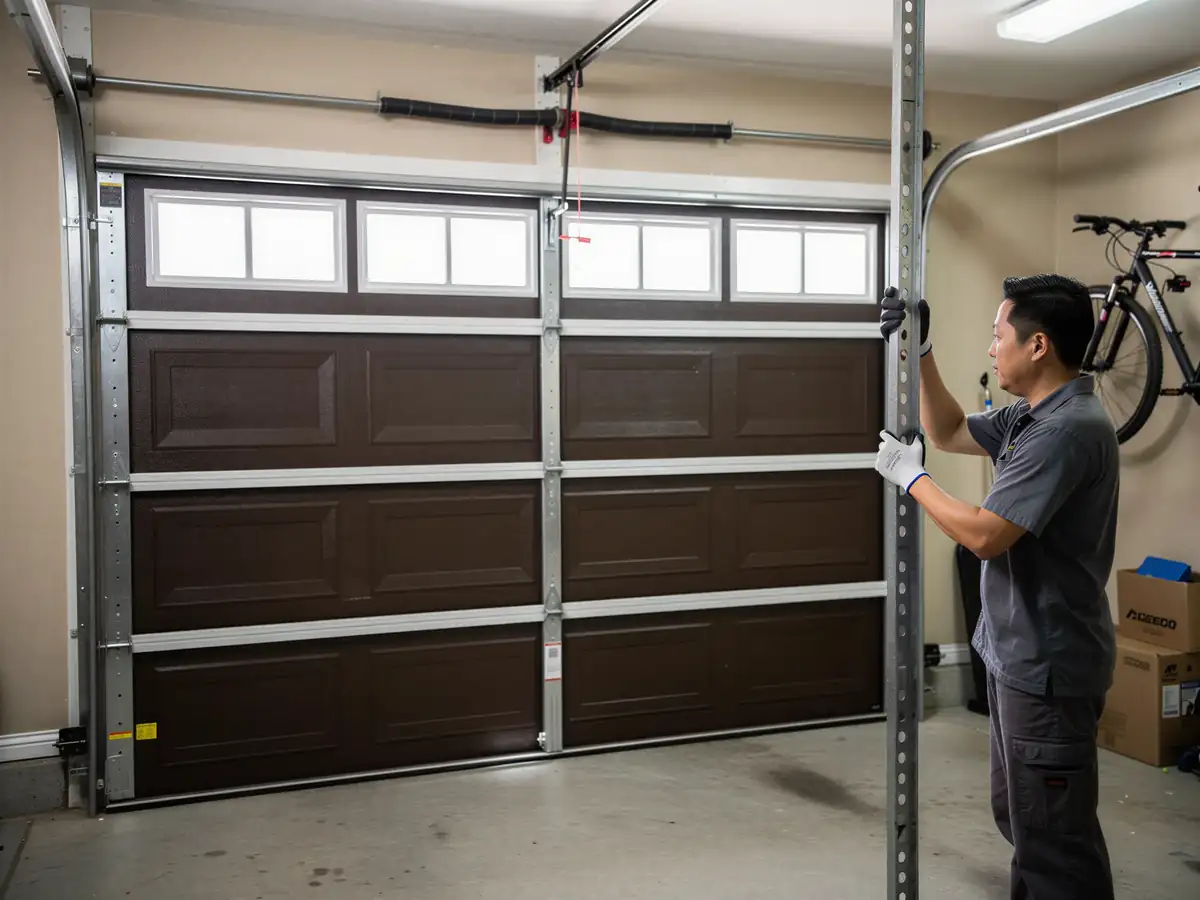
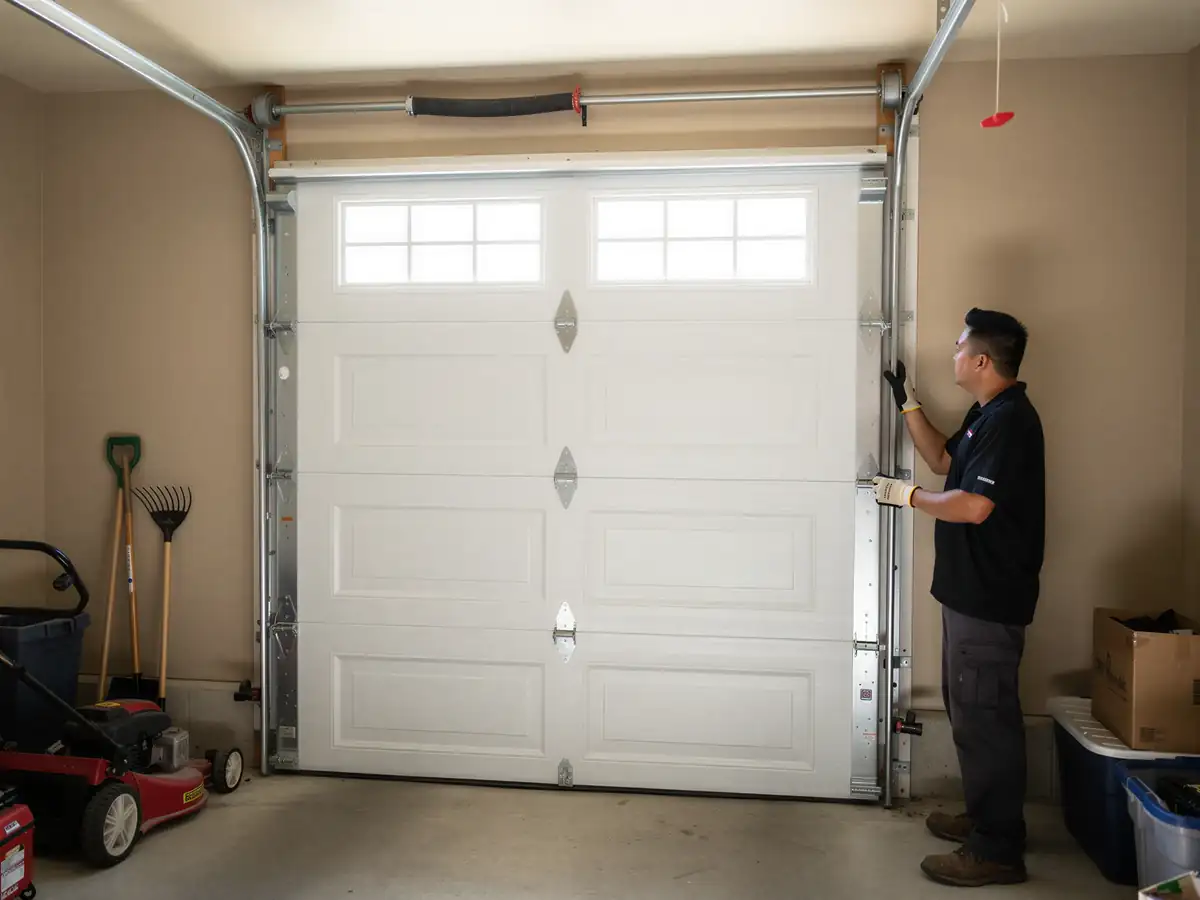
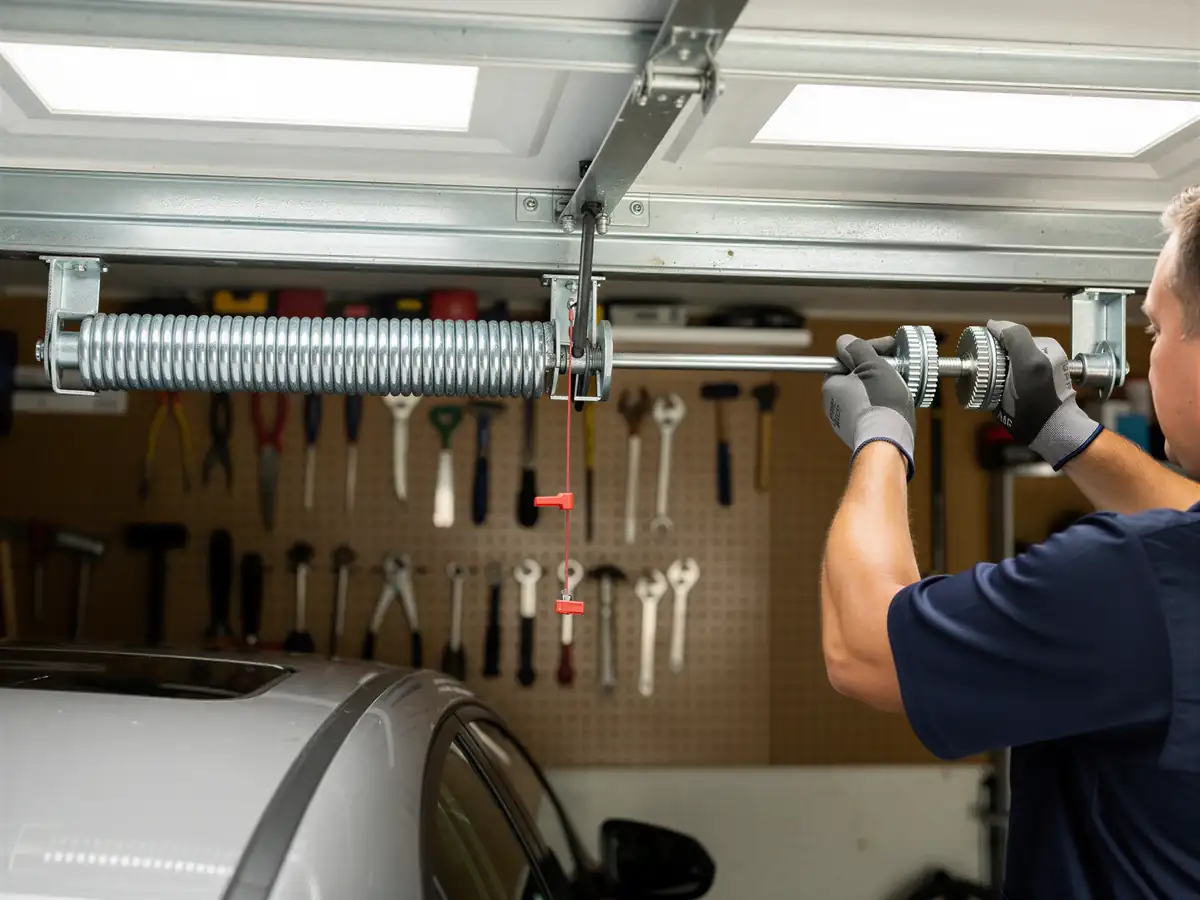
What we don't recommend doing yourself, on a house built around 1978 especially, is anything involving the torsion spring or the cables running alongside it. The spring stores enough force to do real damage, and on hardware this old, you often can't tell by looking whether the shaft or the end bearing plate is also near failure. We've seen people replace a spring and have the drum crack a week later because nobody checked the rest of the assembly.
One honest limitation here: we don't carry every obsolete bracket or drum style for doors this old on the truck. If your garage door is a less common brand from that era, there's sometimes a wait on a specific part, and we'll tell you that up front rather than guess at a timeline.
How We Fix It
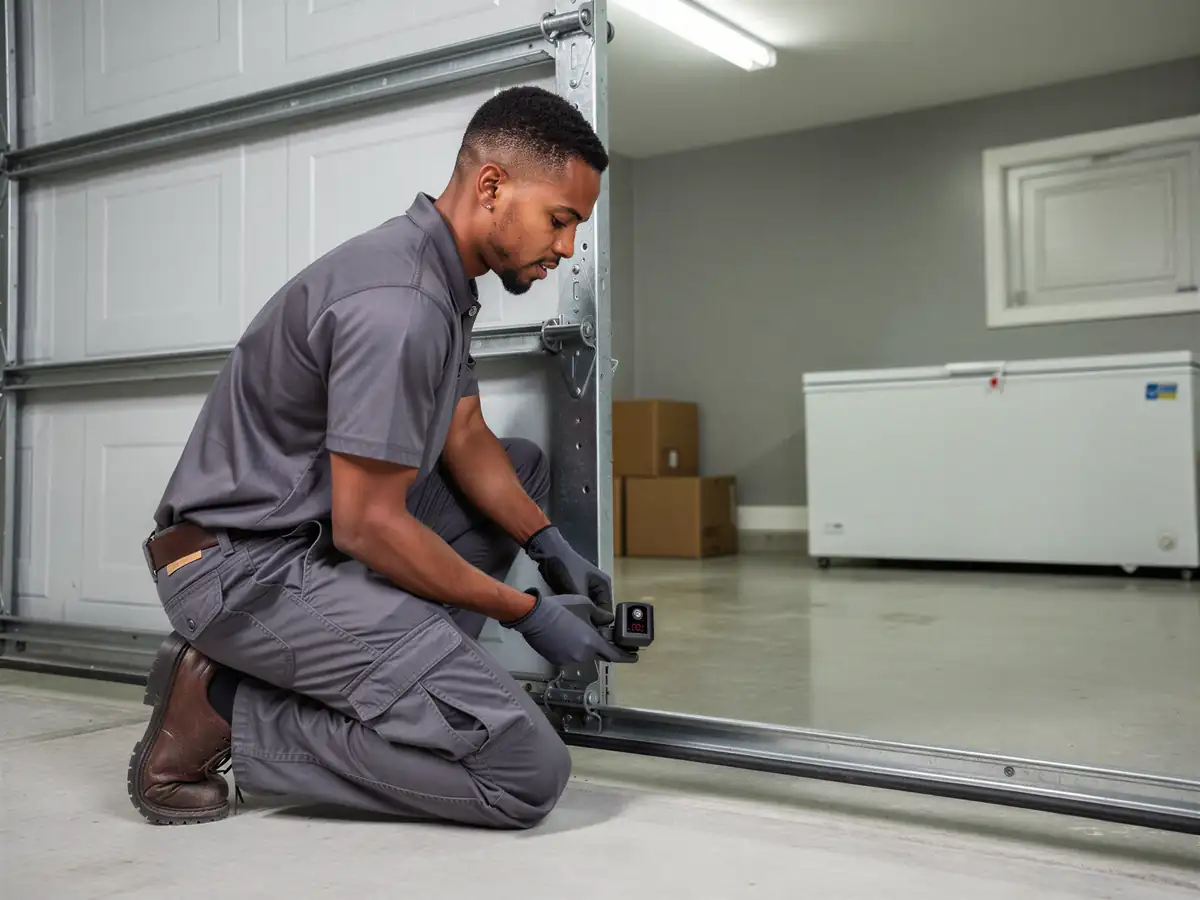
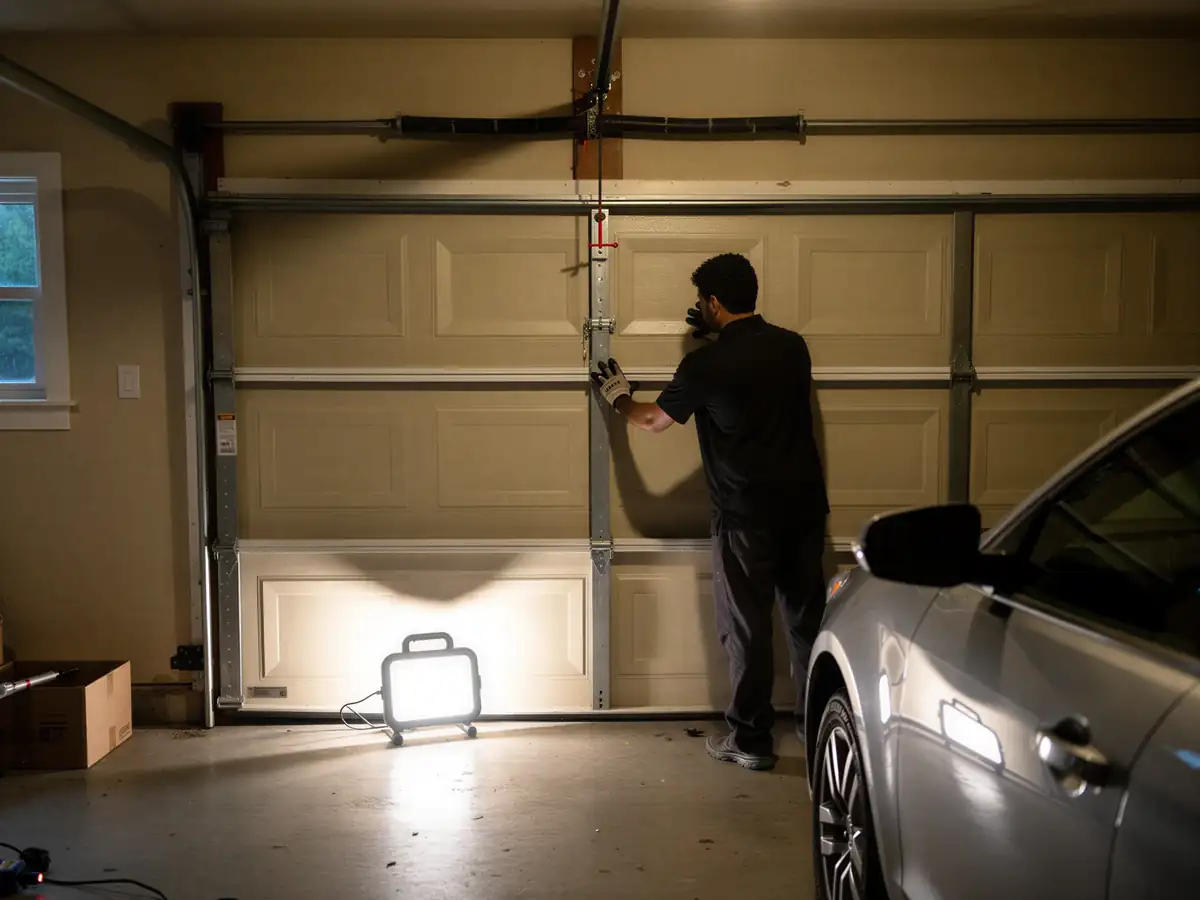
We start by checking the whole system, not just the part that failed
Because on a door built around the late 1970s the spring, cables, drums, and end bearings are usually all the same age and wearing at a similar rate. Replacing one without checking the others just moves the next failure a few months down the road.
For torsion spring replacement, we match the spring to the door's actual weight and the drum size on hand
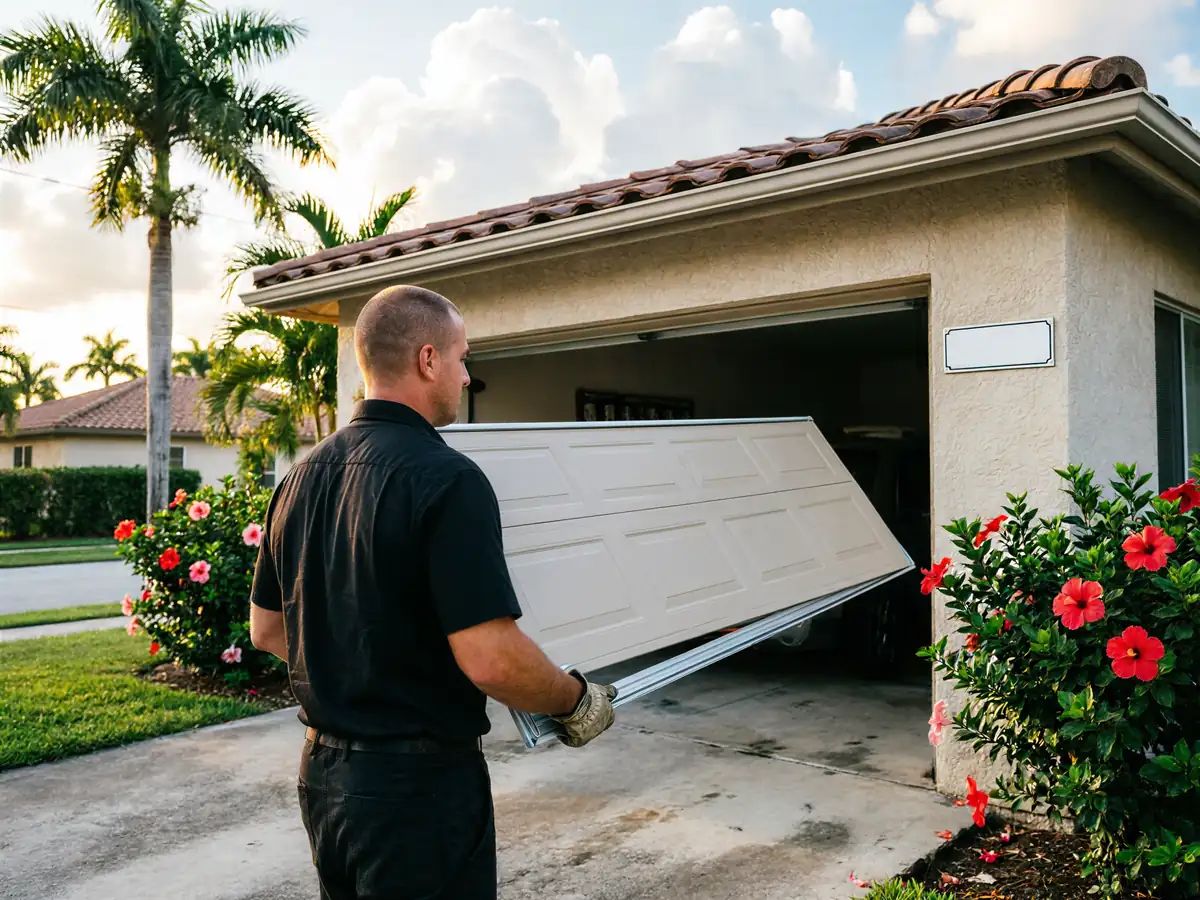
Not just the make of the opener. For panel damage, which shows up more on these older steel doors than on newer composite ones, we assess whether a single section swap is realistic or whether the frame's flexed enough that it's not worth chasing.
Because Pinellas Park sits in the same mild temperate band as the rest of the service area
We're not dealing with frozen components or ice-locked tracks - the wear here comes from salt air and humidity working slowly on galvanized coatings, not sudden cold snaps.
Parts We Carry
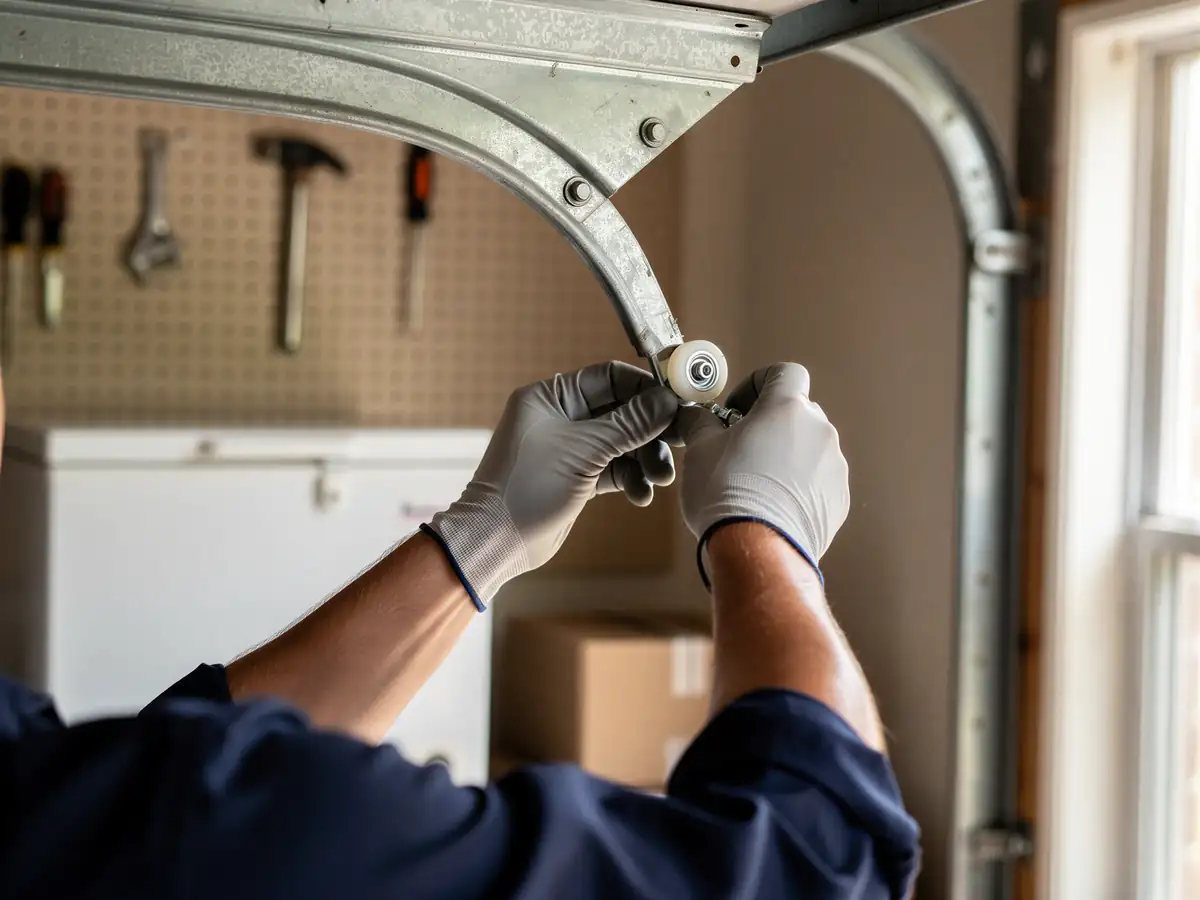
We stock the torsion springs, cables, rollers, and standard hinges that cover most of what fails on doors from the late 1960s through the 1980s, since that's the bulk of what we run into in this part of the county. Standard galvanized hardware, common drum sizes, and the opener gear kits that wear out on units from that era are all things we can usually handle on the first visit.
What we don't always have on the truck: specialty brackets for less common original brands, custom panel colors that have been discontinued, or wood-composite sections that were only made for a short run. For those, we'll tell you straight whether it's a short order wait or whether replacement makes more sense than chasing a matched part.
For a closer look at the repair side of things for this area, see our dedicated page on garage door repair in Pinellas Park, or check our general St. Petersburg service page for the full range of what we do.